Oceans & Water: Why Every Drop Decides Our Future (And How You Can Help)
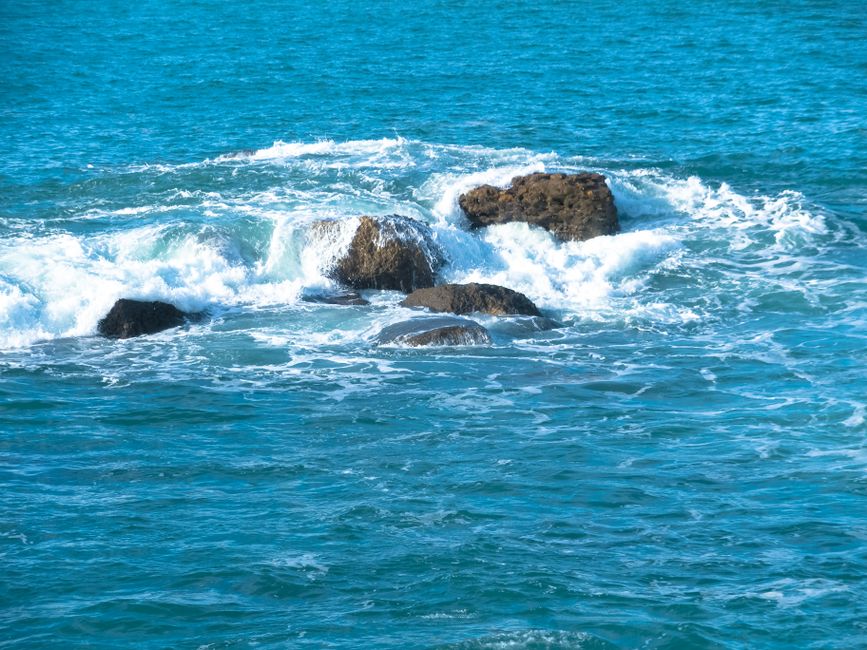
Oceans & water are not a topic. They are the operating system of the planet you live on. The ocean covers roughly 71 percent of Earth’s surface — about 361 million square kilometres of moving, breathing, carbon-swallowing blue — and it holds something like 97 percent of all the water there is. Every cloud that has ever rained on your city, every glass you have ever drunk, every crop that fed you, passed through that system on its way to you.
And yet most of us treat oceans and water as background. They are the setting, not the story. That instinct is understandable, and it is also the single biggest reason both are in trouble. You cannot protect what you have quietly filed under “scenery.”
This guide is an attempt to move oceans and water back into the foreground. It covers how the system actually works, what is putting it under strain, who is paying the price first, and — the part that matters most on a platform built around giving and doing — what genuinely works. Not vague encouragement. Specific, evidence-backed actions you can take this week, this month, and this year, whether you are an individual with ten spare minutes, a teacher with a class of thirty, or a community group with a modest budget and a lot of determination.
What This Guide Covers
- The blue majority: what oceans & water really means
- One system: how your tap connects to the tide
- Seven things the ocean does for you every day
- The freshwater paradox
- The nine pressures squeezing oceans & water
- Who pays first: the justice side
- What actually works: solutions with evidence
- Your personal oceans & water playbook
- A 30-day challenge
- For groups, schools and charities
- Fundraising ideas that work
- How to choose an oceans & water charity
- Measuring impact: metrics that mean something
- Myths and facts
- A short glossary
- The next decade: reasons for hope
- Frequently asked questions
The Blue Majority: What Oceans & Water Really Means
We call it “the ocean” in the singular for a reason. The names on the map — Pacific, Atlantic, Indian, Southern, Arctic — are human bookkeeping. Physically there is one continuous body of saltwater, stirred by a global circulation sometimes called the ocean conveyor belt, in which a single water molecule may take a thousand years to complete a full circuit from the surface of the North Atlantic to the deep Pacific and back.
That single body is astonishingly large and astonishingly deep. Average depth is somewhere around 3,700 metres. If you flattened Earth’s surface entirely, the water would cover the whole planet to a depth of roughly two and a half kilometres. More than 90 percent of the habitable living space on this planet, measured by volume, is ocean. Most of it is cold, dark, and almost entirely unstudied. We have mapped the surface of Mars in greater detail than we have mapped our own seafloor.
Now hold that next to a second number. Of all the water on Earth, about 97 percent is salt. Of the remaining sliver, roughly two percent is locked up frozen in glaciers, ice caps and permafrost. What is left — the liquid fresh water in rivers, lakes, accessible groundwater and the atmosphere, the water that every terrestrial ecosystem and every human civilisation has ever run on — is well under one percent of the total.
That is the framing that makes oceans & water a single subject rather than two. The ocean is the reservoir. The fresh water is the working fluid. They are the same substance in different phases of the same cycle, and damage to one shows up in the other, usually within a season.
One System: How the Water Cycle Connects Your Tap to the Tide
Here is the loop, stripped to essentials. Solar energy evaporates water from the ocean surface — the ocean supplies the overwhelming majority of atmospheric moisture. Winds carry that vapour inland. It condenses, falls as rain or snow, feeds soils, aquifers, streams and rivers, supports forests and farms and cities, and then drains back to the sea, carrying with it whatever it picked up on the way.
That last clause is the one people skip. Rivers are not just water delivery systems; they are conveyor belts for everything soluble or floatable in a watershed. Fertiliser from a field in the Midwest, a cigarette filter dropped on a pavement in Manila, microfibres from a wash cycle in Manchester, pharmaceutical residues from a hospital in Lagos — all of it has a plausible path to the sea. Estimates commonly attribute the large majority of marine plastic to land-based sources, moved seaward by rivers and stormwater.
The connection runs the other way too. The ocean regulates the temperature and rainfall patterns of continents thousands of kilometres from any coast. The El Niño–Southern Oscillation, a shift in Pacific sea surface temperatures, reliably reshuffles drought and flood risk across East Africa, South Asia, Australia and the Americas. Monsoons — which more than a billion people farm by — are ocean-driven phenomena. A landlocked farmer in Zambia has a direct, physical stake in what happens to sea surface temperature in the Indian Ocean.
This is why the environmental movement increasingly talks about a source-to-sea approach: you cannot fix an estuary while ignoring the sewage plant 400 kilometres upstream, and you cannot secure a city’s drinking water while ignoring the health of the forested catchment that filters it. Oceans and water are one problem wearing two hats.
Seven Things the Ocean Does For You Every Single Day
If the ocean sent you an invoice, most people would be unable to pay it. Here is a partial list of services rendered.
1. It makes roughly half the air you breathe
Marine phytoplankton — microscopic, photosynthesising drifters, mostly invisible to the naked eye — are commonly estimated to produce at least 50 percent of the oxygen in Earth’s atmosphere. The frequently quoted version is that every second breath you take comes from the sea. Trees get the credit; plankton do a comparable share of the work.
2. It absorbs the heat and carbon we keep producing
This is the service that has quietly prevented catastrophe so far. Scientific assessments consistently estimate that the ocean has taken up around 90 percent of the excess heat trapped by greenhouse gases, and somewhere in the region of a quarter to a third of the carbon dioxide humans have emitted. Without that buffering, surface air temperatures would already be far beyond anything modern civilisation has experienced. The ocean has been absorbing our mistakes at a scale that is difficult to overstate — and, as we will see, at a cost.
3. It feeds billions of people
Seafood is a primary protein source for roughly three billion people, and in many coastal and island nations there is no realistic substitute. Fisheries and aquaculture support the livelihoods of hundreds of millions when you count processing, trading, boat-building and everything downstream. For a large share of those people, fish is not a lifestyle preference. It is dinner.
4. It underwrites coastal economies
Tourism, ports, recreation, energy, shipbuilding and fisheries together form what is often called the blue economy, with annual value routinely estimated in the trillions of dollars. Offshore wind is growing fast enough to reshape the industrial map of entire coastlines.
5. It moves almost everything you own
Around 80 to 90 percent of world merchandise trade by volume travels by sea. The phone or laptop you are reading this on almost certainly crossed an ocean. So did the components inside it, and probably the coffee next to it.
6. It holds medicine we have barely begun to open
Marine organisms have already given us antiviral and anticancer compounds, and the enzyme chemistry behind widely used laboratory techniques. Deep-sea and coral-reef biodiversity represents a pharmacological library we are burning before we have read it.
7. It defends the coast
Coral reefs, mangroves, salt marshes and oyster reefs absorb wave energy before it reaches homes. Healthy mangrove belts can dramatically reduce storm surge damage, and studies of coral reefs have found they dissipate the large majority of incoming wave energy. Replacing that protection with concrete is possible in principle and ruinously expensive in practice — and the concrete does not reproduce itself, shelter fish nurseries, or store carbon.
The Freshwater Paradox: A Water Planet With a Water Crisis
Here is the contradiction at the centre of this subject. We live on a world drowning in water, and billions of people cannot reliably get a safe glass of it.
Global monitoring puts the number of people without safely managed drinking water at roughly two billion, and those without safely managed sanitation at around three and a half billion. Hundreds of millions still rely on surface water — ponds, streams, irrigation canals — as their primary source. Unsafe water, poor sanitation and inadequate hygiene remain among the leading contributors to diarrhoeal disease, which continues to be a major cause of death in children under five. These are not exotic tropical diseases. They are entirely preventable illnesses caused by the absence of a tap and a toilet.
Scarcity is also intensifying. Roughly half the world’s population is estimated to experience severe water scarcity for at least part of the year. Major aquifers on several continents are being drawn down faster than rainfall replaces them, which is not a shortage so much as a slow-motion overdraft. Agriculture accounts for around 70 percent of global freshwater withdrawals, much of it through irrigation systems that lose a substantial fraction to evaporation and leakage before it reaches a root.
Climate change is not creating a water crisis so much as sharpening the one that exists. A warmer atmosphere holds more moisture, which means more intense rainfall when it does rain and longer dry spells between. Glacier-fed rivers that supply hundreds of millions of people in Asia and South America face an awkward trajectory: more water in the short term as ice melts, then progressively less as the ice that regulated the flow disappears. Rising seas push saltwater into coastal aquifers and delta farmland, quietly ruining fresh water sources that served communities for generations.
The practical takeaway: freshwater problems are rarely problems of total volume. They are problems of distribution, timing, infrastructure, governance and pollution. Which is genuinely good news, because those are things human beings can fix.
The Nine Pressures Squeezing Oceans & Water
Environmental writing has a habit of presenting one villain at a time. Reality is a stack of interacting pressures, and the interactions matter more than any single item. A reef weakened by warming is far less able to survive a pollution event; a fish population thinned by overfishing recovers far more slowly from a marine heatwave.
1. Plastic pollution
Estimates for the amount of plastic entering the ocean each year commonly land somewhere between 8 and 11 million tonnes, and total production keeps climbing. The visible fraction — bottles, bags, fishing gear — is the part that makes the photographs. The more insidious fraction is microplastic: fragments under five millimetres from degraded litter, synthetic textile fibres shed in the wash, and tyre wear particles washed off roads. Microplastics have now been documented in Arctic sea ice, in the deepest ocean trenches, in rainfall over remote mountains, in seafood, in drinking water, and in human tissue.
Abandoned, lost or discarded fishing gear deserves special mention. Often called ghost gear, it can continue trapping and killing marine animals for years or decades, and it makes up a disproportionate share of the plastic mass in some ocean regions.
2. Climate heating and marine heatwaves
All that absorbed heat has to go somewhere, and it has gone into the water. Ocean heat content has risen steadily and measurably for decades. One visible consequence is coral bleaching: when water stays too warm for too long, corals expel the symbiotic algae that feed and colour them, turning white and, if conditions do not improve, dying. Repeated mass bleaching events over recent decades have hit reef systems worldwide, including the largest and best protected.
Warming also drives thermal expansion, one of the two main contributors to sea level rise alongside melting land ice, and it shifts species distributions poleward — scrambling fisheries, food webs and the economic assumptions built on top of them.
3. Ocean acidification
Sometimes called the other carbon problem. When CO₂ dissolves in seawater it forms carbonic acid, lowering pH. Surface ocean pH has fallen by roughly 0.1 units since the pre-industrial era — which, because the scale is logarithmic, represents an increase in acidity on the order of 30 percent. That makes it harder for corals, oysters, clams, certain plankton and other calcifying organisms to build and maintain shells and skeletons. Shellfish hatcheries on some coasts have already had to actively manage seawater chemistry to keep larvae alive. When you undermine calcifying plankton you are pulling at the base of the marine food web.
4. Overfishing and destructive gear
Global assessments have found that roughly a third of monitored fish stocks are fished at biologically unsustainable levels, with the proportion having risen substantially since the 1970s. Illegal, unreported and unregulated fishing compounds the problem, undermining the countries and communities that do play by the rules. Bycatch — the unintended capture of turtles, seabirds, dolphins, sharks and juvenile fish — kills enormous numbers of animals with no commercial value to the vessel. Bottom trawling, which drags heavy gear across the seafloor, can flatten structurally complex habitats that took centuries to form, and may disturb carbon stored in seabed sediments.
5. Nutrient runoff and dead zones
Fertiliser and manure that wash off farmland, together with inadequately treated sewage, deliver a surge of nitrogen and phosphorus to coastal waters. Algae bloom explosively, then die and decompose, and decomposition consumes oxygen. The result is hypoxia — water with too little oxygen to support most animal life. Several hundred such dead zones have been identified globally, some seasonal and enormous. Harmful algal blooms can also produce toxins that close fisheries, contaminate shellfish and sicken people and pets.
6. Coastal habitat loss
Mangroves, seagrass meadows, salt marshes and coral reefs are simultaneously the most valuable and the most heavily developed parts of the ocean. Large fractions of the world’s mangroves have been cleared over the past half-century for aquaculture ponds, agriculture and construction. Seagrass has been disappearing at rates that would be front page news if the meadows were above water. These are the nurseries. Lose them and you lose the fish, the coastal protection, and some of the densest carbon storage per hectare on the planet.
7. Chemical and pharmaceutical pollution
Beyond nutrients, oceans and rivers receive a continuous low dose of industrial chemicals, heavy metals, pesticides, per- and polyfluoroalkyl substances (the so-called forever chemicals), and pharmaceutical residues that pass through both human bodies and treatment plants. Some of these bioaccumulate, concentrating as they move up the food chain, which is why advisories exist about mercury in large predatory fish. Others act as endocrine disruptors at very low concentrations, with effects on reproduction and development in aquatic species.
8. Underwater noise and shipping
The ocean is an acoustic world. Whales, dolphins and many fish navigate, hunt, and communicate by sound over distances that light cannot travel. Engine noise, seismic surveys and construction have raised background noise dramatically in busy waters, masking those signals and causing measurable stress. Ship strikes are also a leading cause of death for several large whale populations. Encouragingly, this is one of the more tractable problems: quieter propeller design, modest speed reductions and rerouting around known habitat produce immediate, measurable improvements.
9. The emerging frontier: deep-sea mining
Interest in extracting metals from polymetallic nodules and hydrothermal vent deposits on the deep seabed has grown alongside battery demand. The ecosystems involved are ancient, extraordinarily slow to recover, and poorly understood — many species there have not yet been described. A significant number of states, scientists and companies have called for a moratorium or precautionary pause until the consequences are better characterised. This is a rare case where the damage has not yet been done at scale, which makes it an unusually high-leverage advocacy target.
Who Pays First: The Justice Side of Oceans & Water
Environmental harm is never distributed evenly. Oceans and water make that especially stark, because water flows downhill and consequences settle at the bottom.
Small island developing states
Island nations contribute a negligible share of global emissions and face some of the most existential consequences: sea level rise, saltwater intrusion into the thin freshwater lenses they depend on, intensifying cyclones, and reef degradation that undercuts both fisheries and tourism at once. For some low-lying atoll nations the conversation has already shifted from adaptation to questions of sovereignty and relocation.
Coastal fishing communities
Small-scale fishers supply a large share of the fish eaten in developing countries and employ far more people than industrial fleets, using a fraction of the fuel. They are also the least equipped to follow shifting stocks or absorb a bad season. When industrial vessels or illegal operators strip a nearshore fishery, the loss is not spread across a portfolio. It lands on one town.
Women and girls
Where water is not piped, collecting it is overwhelmingly the work of women and girls. UNICEF has estimated that women and girls collectively spend on the order of 200 million hours every day fetching water. That is time not spent in school, in paid work, or resting. Lack of safe, private sanitation at school is a documented factor in girls’ attendance, particularly after puberty. A water point is therefore also an education intervention, an economic intervention, and a safety intervention.
Children and health
Children under five bear the heaviest burden of waterborne disease. Repeated diarrhoeal illness contributes to malnutrition and stunting, which impairs cognitive development and earning potential for life. Clean water is not only about avoiding acute illness — it is about whether a child reaches their full potential at all.
There is a hard-nosed argument here as well as a moral one. Analyses of water and sanitation investment consistently find returns of several dollars in avoided health costs and recovered productive time for every dollar spent. Few interventions in any sector perform that well.
What Actually Works: Solutions With Evidence Behind Them
Doom is easy to write and useless to act on. Here is what the record actually shows is effective.
Protect: marine protected areas and the 30×30 goal
Well-designed, well-enforced marine protected areas work, and they work faster than most people expect. Fully protected reserves consistently show large increases in fish biomass compared with unprotected areas, and bigger fish produce disproportionately more eggs. That surplus spills over into surrounding waters, which is why fishers adjacent to established reserves often end up better off. The Kunming-Montreal Global Biodiversity Framework set a target of protecting 30 percent of land and sea by 2030 — the 30×30 goal.
The critical caveat: designation is not protection. A large share of nominally protected ocean permits industrial extraction inside its boundaries. The metric that matters is not area on a map but area that is fully or highly protected and genuinely enforced. When you evaluate an ocean charity, this is one of the sharpest questions you can ask.
Restore: blue carbon habitats
Mangroves, seagrasses and salt marshes store carbon in waterlogged soils where decomposition is slow, achieving carbon densities per hectare that can exceed tropical rainforest by several times. Restoring them delivers a rare quadruple win: carbon storage, fish nursery habitat, coastal storm protection, and local livelihoods.
Restoration also has a track record of failure when done badly — monoculture mangrove plantings in unsuitable hydrology have wasted enormous sums. What works is restoring the conditions rather than just planting the plants: reinstating tidal flow, matching species to site, removing the pressure that caused the loss, and involving the community who will live alongside the result for the next thirty years.
Reform: fisheries management that pays for itself
Fish stocks recover. This is one of the most encouraging facts in conservation. Regions that have implemented science-based catch limits, effective monitoring and enforcement have seen depleted stocks rebuild, sometimes within a decade or two. The tools are known: catch limits set by stock assessment rather than politics, gear modifications that cut bycatch, seasonal and spatial closures during spawning, satellite monitoring of vessels, port state controls to keep illegal catch out of markets, and transparency about who owns which vessel. Reform of harmful subsidies — public money that props up fishing capacity beyond what stocks can support — is among the highest-leverage policy changes available.
Redesign: turning off the plastic tap
Cleanups are valuable and necessary, and they are also downstream of the actual problem. The durable fix is upstream: reduce unnecessary production, redesign packaging for reuse and genuine recyclability, hold producers financially responsible for end-of-life through extended producer responsibility schemes, and build waste collection infrastructure in the regions where mismanaged waste is highest. Negotiations toward a global plastics treaty represent the most significant opportunity in a generation to address this at the level where it is actually decided.
Deliver: WASH that lasts
The water sector has learned an expensive lesson: a striking proportion of hand pumps installed in past decades were non-functional within a few years. Drilling a borehole is the easy part. Programmes that endure share common features — community ownership from the design stage, a realistic maintenance and spare parts supply chain, local technicians who are trained and paid, tariff structures that fund repairs, and sanitation and hygiene work delivered alongside the water source rather than as an afterthought. When you are choosing where to give, functionality rates several years after installation tell you far more than the number of wells drilled.
Nature-based solutions for fresh water
Some cities have discovered that protecting and restoring a forested catchment is dramatically cheaper than building the filtration plant that would otherwise be required. Restoring floodplains and wetlands reduces downstream flood damage while recharging groundwater and filtering nutrients. Rainwater harvesting, managed aquifer recharge, treated wastewater reuse and drip irrigation all stretch existing supply substantially. On the agricultural side, better irrigation scheduling, soil health practices that increase water retention, and crop choices matched to local rainfall can free up enormous volumes without anyone going short.
Your Personal Oceans & Water Playbook
Individual action does not substitute for systemic change, and anyone who tells you your straw choice will fix the ocean is selling something. But individual action is not nothing either: it shifts demand, it normalises behaviour in your social circle, and — the part most often overlooked — people who change their own habits are markedly more likely to vote, donate, volunteer and campaign on the same issue. Personal action is a gateway, not a destination.
In the kitchen
- Choose seafood using a credible regional sustainability guide or certification, and vary what you eat — concentrating global demand on a handful of species is itself a pressure. Small pelagics like sardines, mackerel and anchovies are often both lower-impact and nutritionally excellent.
- Cut food waste. Food production is the largest consumer of fresh water on Earth; roughly a third of food produced is never eaten. Every wasted meal wasted the water that grew it.
- Reduce single-use packaging where a genuine alternative exists, and prioritise reuse over recycling — recycling rates for plastics remain low almost everywhere.
- Never pour fats, oils or grease down the sink. They congeal, block sewers, and cause the overflows that put untreated sewage into rivers.
In the bathroom and laundry
- Fix leaks promptly. A dripping tap or a silently leaking toilet can waste thousands of litres a year without ever appearing as a puddle.
- Wash synthetic clothing less often, at lower temperatures, on full loads, and consider a microfibre filter bag or an in-line filter — textile fibres are a major microplastic source.
- Flush only the three Ps: pee, poo and paper. Wet wipes, cotton buds and sanitary products cause blockages and end up on beaches.
- Return unused medicines to a pharmacy take-back scheme rather than flushing them.
- Where reefs are nearby, choose sunscreens formulated to minimise reef harm — and remember that a rash guard and shade are the lowest-impact sun protection there is.
In your wardrobe
- Buy less, buy better, wear longer. Textile production is enormously water-intensive; producing a single pair of jeans can consume thousands of litres once cotton growing is counted.
- Favour natural or recycled fibres where practical, and repair rather than replace.
In your garden or balcony
- Plant species suited to your local rainfall so irrigation becomes optional rather than mandatory.
- Install a water butt to capture roof runoff.
- Avoid unnecessary pesticide and fertiliser use — anything you apply is one rainstorm away from a storm drain.
- Reduce hard paving. Permeable surfaces let rain soak in rather than sheeting into the drain carrying oil and grit with it.
With your money
- Give regularly rather than occasionally. Predictable income lets organisations plan multi-year restoration and WASH programmes instead of chasing one-off campaigns.
- Check whether your pension or savings are financing the industries you are campaigning against. For most people this is the single largest-leverage financial decision available to them, and it takes an afternoon.
- Support small-scale and local fishers where you can.
With your voice
- Write to elected representatives about specific, live decisions — a marine protected area designation, a sewage discharge licence, a plastics treaty negotiating position. Specific beats general by a wide margin.
- Respond to public consultations. They are frequently under-subscribed, and a few hundred thoughtful responses can genuinely shift an outcome.
- Share what you learn without lecturing. Curiosity travels further than guilt.
A 30-Day Oceans & Water Challenge
If the list above feels like a lot, do it one step at a time. Here is a month that builds from easy to meaningful.
| Days | Focus | Actions |
|---|---|---|
| 1–5 | Audit | Read your water bill. Check every tap and toilet for leaks. Count the single-use plastics you use in one ordinary day and write the number down. |
| 6–10 | Swap | Replace your three most frequent single-use items with durable alternatives. Fit a low-flow showerhead. Set your washing machine to a cooler default. |
| 11–15 | Learn | Find out which river or catchment your home drains into, and where your drinking water comes from. Read one report from a marine science body. Learn three local species. |
| 16–20 | Act locally | Do a solo litter pick along a river, canal or beach and log what you find with a citizen science app. Note the top three item types. |
| 21–25 | Advocate | Write to one representative about one specific local water decision. Respond to one open consultation. Ask your pension provider about fossil fuel and industrial fishing exposure. |
| 26–30 | Commit | Set up a small recurring donation to a vetted oceans or water charity. Sign up for one organised cleanup or restoration day. Invite two people to do the challenge with you. |
For Groups, Schools and Charities: Campaigns That Punch Above Their Weight
Small organisations often assume the ocean is too big a subject for them. In practice, some of the most effective oceans and water work is intensely local.
Beach and river cleanups, done properly
A cleanup that only removes litter is a tidy-up. A cleanup that records what it removes is data collection, and data changes policy. Use an established protocol and app so your counts are comparable with others. Brand audits — recording which companies’ packaging appears most often — have driven real corporate commitments. Prioritise river banks, storm drain outfalls and urban waterways over photogenic beaches: intercepting litter upstream stops it reaching the sea at all, and one blocked outfall may be worth a hundred bag-fuls of beach plastic.
Practical notes: brief volunteers on safety and on what not to touch, avoid disturbing nesting birds and dune vegetation, separate recyclables, and always publish your numbers afterwards. Volunteers who see the total come back.
Citizen science
Volunteer-collected data underpins a surprising amount of marine and freshwater monitoring. Water quality testing, reef surveys, beach litter counts, invasive species reporting, and species identification through photo platforms all accept contributions from trained non-specialists. For a community group, running a monthly water quality monitoring station on a local river creates a time series that no one else is producing — and a time series is the thing regulators cannot easily dismiss.
Storm drain and catchment work
Storm drain marking campaigns — stencilling reminders that drains lead to rivers, not treatment plants — are cheap, highly visible, and popular with schools and local authorities. Pair them with rain garden installations or tree planting in the catchment and you have a programme with both an educational and a physical output.
School and youth programmes
Water is one of the easiest subjects to teach across the curriculum: the science of the water cycle, the geography of catchments, the maths of consumption, the civics of who decides. A school water audit that finds and fixes leaks can save the institution real money, which is a persuasive argument to a governing body. Pair it with a partner school in a different watershed and the learning goes both ways.
Advocacy
Local decisions about sewage discharge permits, coastal development, dredging, marine protected area boundaries and water abstraction licences are frequently made with almost no public input. A group of thirty informed people who show up consistently to a consultation process has outsized influence, simply because almost nobody else does.
Fundraising Ideas for Ocean and Water Causes
Water lends itself to fundraising because the metaphors are so direct.
- Sponsored distance carry. Participants carry water containers over a set route, mirroring the daily walk millions make. Visceral, photogenic, and it explains the cause without a speech.
- Tap challenge. Sponsors pledge for each day a participant lives within a restricted daily water allowance, tracked and shared.
- Adopt a metre. Sell sponsorship of a metre of mangrove, seagrass or reef restoration, with named certificates and periodic photo updates from the site.
- Plastic-free month pledge drive. Combine a behaviour change campaign with per-participant sponsorship, so the fundraising and the impact reinforce each other.
- Cleanup-a-thon. Sponsors pledge per kilogram collected or per hundred items logged. Publish the brand audit results alongside the total.
- Blue dinner. A community meal built entirely around sustainable, low-impact seafood, with a local fisher or scientist as guest speaker.
- Cold water swim or paddle. Reliable, weather-dependent, and strongly community-building. Check safety requirements and water quality first.
- Skills auction. Members auction services — photography, tutoring, baking, repairs — with proceeds to a chosen water project. Costs nothing but time.
Whatever you run, close the loop. Tell donors precisely where their money went, ideally with a photo, a number, and a name. Retention beats acquisition every time, and the organisations with the strongest long-term funding are the ones that report back without being asked.
How to Choose an Oceans & Water Charity
Enthusiasm is abundant; effectiveness is not. Ask these questions before you commit money or time.
- Do they publish outcomes, not just activities? “We ran 40 cleanups” is an activity. “Litter density at monitored sites fell 30 percent over three years” is an outcome.
- Is the work locally led? Programmes designed and run by the communities affected are more durable and more accountable than programmes designed elsewhere and delivered in.
- What happens in year five? For infrastructure work especially, ask about maintenance funding, spare parts, and trained local technicians. Ask for functionality rates on installations from three or more years ago.
- Are the protected areas actually protected? For marine conservation groups, ask what level of protection they secure and what enforcement exists.
- Is the science credible? Do they publish, partner with research institutions, or submit their data to open repositories?
- Is spending transparent? Overhead ratios alone are a poor measure — underfunded organisations often underperform — but unwillingness to explain where money goes is a real warning sign.
- Do they work on causes as well as symptoms? The strongest portfolios combine direct action with policy work.
- Do they say what did not work? Organisations that publish failures are usually the ones learning fastest.
A reasonable strategy for a personal giving budget is to split it: something local where you can see the result and volunteer in person, something international addressing clean water access where the cost per person reached is lowest, and something policy-focused where a small amount of money buys leverage on decisions worth billions.
Measuring Impact: Metrics That Mean Something
| Weak metric | Stronger metric | Why it matters |
|---|---|---|
| Wells drilled | Water points still functional after 3–5 years, and people with year-round access | Installation is easy; sustained service is the actual goal |
| Bags of litter collected | Litter density per 100m over time, plus brand audit data | Tracks whether the source is shrinking, not just the beach |
| Hectares designated | Hectares fully or highly protected with active enforcement | Paper parks deliver no ecological benefit |
| Trees or mangroves planted | Seedling survival at 3 years and canopy cover change | Planting figures routinely overstate outcomes several-fold |
| People reached by campaign | Measured behaviour or policy change | Awareness is a means, not an end |
| Volunteer hours logged | Volunteer retention and repeat participation | Repeat volunteers deliver most of the long-term value |
Myths and Facts
| Common belief | What the evidence suggests |
|---|---|
| The ocean is too big for humans to damage | Human activity has measurably altered ocean temperature, chemistry, oxygen levels and biomass at global scale within a single century |
| Trees produce most of our oxygen | Marine phytoplankton are commonly credited with at least half of atmospheric oxygen production |
| Recycling solves plastic pollution | Global plastic recycling rates remain low; reduction, reuse and redesign do far more |
| Most ocean plastic comes from ships | The large majority originates on land and reaches the sea via rivers and stormwater, though lost fishing gear is a significant contributor by mass |
| Overfished stocks never recover | Stocks under science-based management have repeatedly rebuilt, sometimes substantially within a decade or two |
| Water shortages mean the planet is running out of water | Total volume is unchanged; the crisis is one of distribution, timing, contamination and infrastructure |
| Bottled water is safer than tap water | In places with regulated supply, tap water is typically as safe or safer, far cheaper, and vastly lower-impact |
| Individual action is pointless | Individual action is insufficient alone, but it shifts demand, spreads norms and strongly predicts civic and political engagement |
A Short Glossary of Oceans & Water Terms
- Blue carbon
- Carbon captured and stored by coastal and marine ecosystems, especially mangroves, seagrass meadows and salt marshes.
- Bycatch
- Marine animals caught unintentionally during fishing operations, often discarded dead or dying.
- Catchment (watershed)
- The area of land from which all rainfall drains to a common river, lake or coastal outlet.
- Eutrophication
- Nutrient over-enrichment of water, driving algal blooms whose decomposition depletes oxygen.
- Ghost gear
- Abandoned, lost or discarded fishing equipment that continues to trap marine life.
- Hypoxia / dead zone
- Water with oxygen too low to support most marine animal life.
- Marine protected area (MPA)
- A defined ocean area managed for conservation. Protection levels range from fully protected no-take reserves to areas permitting substantial extraction.
- Microplastic
- Plastic fragments smaller than five millimetres, from degraded litter, textile fibres, tyre wear and industrial pellets.
- Ocean acidification
- The decline in seawater pH caused by absorption of atmospheric carbon dioxide.
- Safely managed drinking water
- Water from an improved source, on premises, available when needed, and free from contamination.
- Thermohaline circulation
- The global ocean circulation driven by differences in temperature and salinity, redistributing heat around the planet.
- WASH
- Water, sanitation and hygiene — the standard framing for interventions in this sector.
The Next Decade: What Gives Us Reason for Hope
It would be dishonest to end a piece like this on a note of easy optimism. The trajectory on emissions, plastic production and coastal development is not yet bending the way it needs to. But it would be equally dishonest to leave out the genuine wins, because they are the evidence that effort produces results.
The ozone layer is recovering, because the world negotiated a treaty and enforced it. Whale populations that were hunted to the edge have rebounded substantially since commercial whaling was curtailed. Rivers across Europe and North America that were biologically dead in the mid-twentieth century now support fish and the birds that eat them, because sewage treatment and industrial discharge regulation worked. Fish stocks in well-managed regions have rebuilt. The proportion of the world’s population with access to basic drinking water has climbed by hundreds of millions of people over recent decades — slower than anyone wanted, but relentlessly upward.
Right now several things are genuinely in play. The High Seas Treaty, agreed in 2023, creates a mechanism for establishing protected areas in the two thirds of the ocean that lies beyond any nation’s jurisdiction — an area that was, until recently, effectively ungoverned for conservation purposes. Negotiations toward a global plastics agreement continue. The 30×30 target has focus and political momentum behind it. Offshore renewables are scaling faster than most projections anticipated. Satellite monitoring has made illegal fishing far harder to hide. And restoration science has matured from hopeful planting to genuine ecological engineering.
None of that happens on autopilot. Every one of those wins exists because specific people organised, gave, voted, campaigned, showed up to consultations, and refused to accept that the ocean was somebody else’s department. That is the actual mechanism by which environmental outcomes change, and it has room for you in it.
Frequently Asked Questions
Why are oceans and water treated as one topic?
Because physically they are one system. The ocean holds about 97 percent of Earth’s water and supplies most of the moisture that becomes rain over land. Fresh water then drains back to the sea, carrying whatever it collected. Pollution in a river becomes pollution in an ocean; a warming ocean changes rainfall thousands of kilometres inland. Treating them separately means missing most of the causes and most of the solutions.
How much of Earth’s water is actually drinkable?
Very little. Roughly 97 percent is saltwater. About two percent is frozen in glaciers and ice caps. That leaves well under one percent as accessible liquid fresh water in rivers, lakes, accessible groundwater and the atmosphere — and not all of that is clean enough to drink without treatment.
Does the ocean really produce half our oxygen?
Marine phytoplankton are commonly estimated to generate at least 50 percent of atmospheric oxygen through photosynthesis. The often-repeated line that every second breath comes from the ocean reflects that estimate. Land plants matter enormously too — the point is that the ocean’s contribution is comparable and widely underappreciated.
What is the single most effective thing an individual can do?
There is no single answer, but the highest-leverage actions are usually the least visible ones: moving your savings or pension away from the industries driving the damage, giving regularly to effective organisations rather than occasionally, and engaging with specific local decisions about water and coastal management. Household habits matter and are worth doing — and they matter most as the on-ramp to those larger actions.
Do beach cleanups actually make a difference?
Yes, with two qualifications. They immediately remove material that would otherwise entangle or be eaten by wildlife, and they are among the best community engagement tools in conservation. But they address a symptom. Cleanups become far more powerful when volunteers record what they find, because that data drives policy and corporate change. Working upstream on rivers and storm drains also intercepts far more material per hour than working on beaches.
Is it still okay to eat fish?
For most people, yes, with attention to what and how much. Roughly two thirds of assessed stocks are fished within biologically sustainable limits, and for around three billion people seafood is a critical protein source with no easy substitute. Use a credible regional sustainability guide, vary the species you eat rather than concentrating demand on a few, favour small pelagics and well-managed local fisheries, and be cautious with large predatory fish where mercury advisories apply.
What is ocean acidification and why does it matter?
When the ocean absorbs carbon dioxide, that gas reacts with seawater to form carbonic acid, lowering pH. Surface ocean pH has dropped around 0.1 units since pre-industrial times, which on a logarithmic scale means roughly a 30 percent increase in acidity. This makes it harder for corals, shellfish and some plankton to build calcium carbonate shells and skeletons — and because those plankton sit near the base of the marine food web, the effects propagate upward.
What are microplastics and should I be worried?
Microplastics are plastic fragments smaller than five millimetres, arising from degraded litter, synthetic textile fibres, tyre wear and industrial pellets. They have been found essentially everywhere scientists have looked, including in human tissue. Research on health effects is active and not yet settled. The reasonable response is precautionary: reduce plastic use where alternatives exist, filter laundry microfibres, and support policy that limits production rather than only managing waste.
How can I tell if a water charity is effective?
Ask what percentage of their installations from three to five years ago are still functioning. Ask whether communities own and maintain the infrastructure, whether local technicians are trained and paid, and whether sanitation and hygiene are delivered alongside the water source. Organisations doing this well answer readily and often publish the figures unprompted. Number of wells drilled, by itself, tells you almost nothing.
What can a school or small community group realistically achieve?
More than most expect. A monthly water quality monitoring station on a local river creates a data series that regulators cannot easily ignore. A storm drain marking campaign is cheap and highly visible. A school water audit that finds leaks saves real money. And a group of thirty informed people who consistently respond to local consultations on discharge permits, coastal development or abstraction licences has genuine influence, because participation in those processes is usually near zero.
Is deep-sea mining happening yet?
Commercial-scale extraction has not begun at scale, and international rules are still being negotiated. The affected ecosystems are ancient, extremely slow to recover, and largely undescribed by science. A significant coalition of states, scientists and companies has called for a moratorium or precautionary pause. Because the damage has not yet occurred at scale, this is an unusually high-leverage area for advocacy.
Does saving water at home help if agriculture uses most of it?
Directly, the effect is modest — agriculture accounts for around 70 percent of global freshwater withdrawals. But household water use has a real energy cost in treatment and pumping, matters a great deal in water-stressed regions and during droughts, and reducing food waste is a household action that directly reduces agricultural water demand. Domestic conservation is worth doing on its own merits and as a step toward the systemic changes that matter more.
Take the First Step Today
The scale of oceans & water challenges can produce a kind of paralysis: the system is so vast that any single action feels like a rounding error. Resist that. The ocean did not decline because of one catastrophic decision; it declined through billions of small, unremarkable choices made without much thought. It will recover the same way — through billions of small, deliberate choices made with thought, backed by policy, funding and organised effort.
So pick one. Fix the leaking tap. Log your next litter pick with real data. Write one letter about one specific decision. Set up one recurring donation to one organisation you have actually checked out. Bring one friend along.
Then do it again next month. That is what protecting oceans and water looks like in practice — not a single heroic gesture, but a habit, held by enough people, for long enough to matter.
