Beyond Direct Debits: Retaining UK Donors Amidst Financial Squeeze
Donor Retention Strategies for UK Nonprofits Facing Household Budget Pressures
UK households are reviewing monthly outgoings with relentless scrutiny. When fixed-rate mortgage deals expire, private rents climb, and energy tariffs remain stubbornly high, voluntary donations frequently land on the chopping block.
Protecting retention rates under these conditions requires fundraising teams to broaden how they define supporter commitment. If direct debits are treated as the only measure of donor loyalty, cash-strapped individuals face an abrupt binary choice between paying or leaving entirely. Resilient charities build flexible engagement pathways instead, sustaining active relationships through adaptable contribution options until household finances stabilise.

Economic Pressures Reshaping UK Philanthropy
Compounding pressures from mortgage renewals, private rent increases, and persistent retail inflation have sharply curtailed discretionary income across UK households. Even where nominal wage growth keeps pace with headline inflation, take-home pay shrinks once families cover essentials like council tax and domestic standing charges.
This squeeze directly undermines conventional regular giving. For decades, fundraising acquisition relied on securing fixed monthly Direct Debits of £5 to £15. Donor retention historically depended on a degree of administrative friction: cancelling a mandate meant telephoning a branch or navigating a desktop portal, so modest monthly gifts often rolled on through sheer inertia.
Modern banking apps have dismantled that barrier. Platforms from Barclays, Lloyds, and Monzo lay out recurring commitments in clear lists, paired with simple one-tap cancellation toggles. When households audit monthly outgoings, voluntary donations sit right alongside streaming subscriptions and gym memberships. Unlike statutory contracts or utility bills, charitable gifts carry no cancellation penalties. Consequently, monthly attrition rates regularly push past the customary 2% to 3% benchmark, hitting organisations that invested heavily in face-to-face or door-to-door acquisition especially hard.
The Blended Engagement Framework
Binary giving models must give way to systems that record every form of participation in your central database. When a supporter cancels a Direct Debit, the retention workflow should immediately introduce alternative ways to stay involved. Tracking volunteer shifts, campaign actions, and peer discussions within the CRM treats non-cash support as direct equity in your mission.
Loyalty deepens through sustained practical involvement. Integrating these distinct activities into a unified supporter score gives fundraising teams an accurate reading of community health. Crucially, when household finances stabilise, active contributors return to regular cash gifts at triple the rate of completely lapsed donors.

Flexible Micro-Giving and Lowered Donation Thresholds
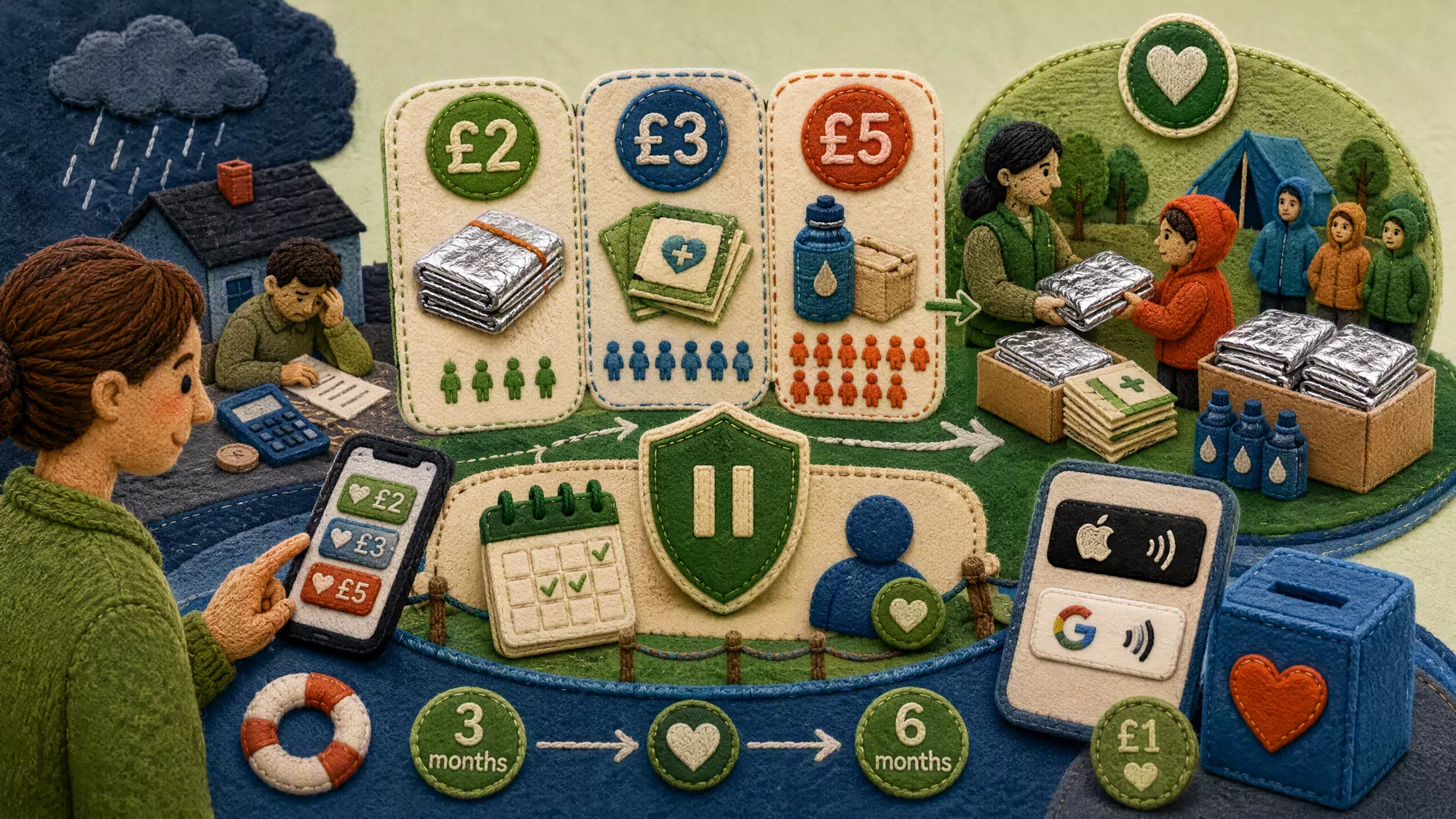
Direct Debit programmes traditionally treat £10 a month as the default baseline for regular giving. Insisting on that threshold during periods of acute financial pressure pushes cash-strapped supporters straight into cancellation. Restructuring donation processing around accessible tiers, beginning at £2 or £3 a month, keeps those relationships intact.
Payment processors like GoCardless and Stripe allow Direct Debit and recurring card mandates to scale down without punitive percentage fees eating into net revenue. When introducing these micro-tiers, tie each level directly to concrete operational outputs. A £2 monthly gift might fund four foil thermal blankets or cover the printing of ten educational health guides. Demonstrating tangible equivalents prevents donors from feeling that smaller contributions are inconsequential.
A structured payment pause mechanism provides a second buffer against churn. UK Direct Debit scheme rules permit organisations to suspend scheduled collections for up to six months without cancelling the underlying mandate. When a supporter visits an online portal or contacts donor care to cancel, offer an automated three-month or six-month payment holiday. UK sector trials show this pause option retains between 20% and 35% of donors who intended to lapse entirely. The supporter stays on your active register, continues receiving stewardship updates, and avoids the friction of re-entering banking details when household finances settle.
Micro-transaction checkouts across digital touchpoints reinforce this flexibility. Integrating Apple Pay and Google Pay enables frictionless £1 donations on confirmation pages, email newsletters, and campaign petitions. These single-tap payments maintain active payment tokens within your merchant gateway, sustaining financial engagement without locking supporters into recurring contractual commitments. Once economic pressures ease, fundraising teams can invite these warm contributors back into regular giving.
Time and Skill Contributions as Direct Value
A supporter who cancels a Direct Debit due to personal budget pressures rarely loses belief in your cause; they simply face short-term cash constraints. If an organisation responds with administrative silence, that relationship quickly withers. Retention workflows should immediately frame practical volunteering as an equal exchange of value, presenting tangible service opportunities within seventy-two hours of a stopped payment.
Generic volunteer intake forms should be replaced with project-based contribution modules. Map out clear roles that remote supporters can complete on flexible schedules. Micro-tasks such as telephone check-ins with isolated beneficiaries, proofreading policy briefings, or transcribing local archives require only two hours per month. For professionals such as solicitors, accountants, and copywriters, structure short pro bono sprints that solve discrete administrative bottlenecks without requiring open-ended weekly commitments.
Log these contributions directly inside your CRM with an assigned replacement valuation. When an individual provides four hours of casework support, record that effort alongside their past giving history. Assigning a standard benchmark value of £15 per hour gives your fundraising team an objective metric for non-cash value generated by your community. This data keeps donor relations teams fully informed, ensuring active volunteers are never treated as cold prospects.
Reflect that financial equivalence back to the participant. Send quarterly contribution statements verifying the concrete worth of their time, showing exactly how many frontline meals were served or counselling hours were staffed through their assistance. This reporting confirms that their direct labour powers your organisation. When household budgets recover, these active collaborators resume regular financial giving as established partners who already understand your frontline operational reality.
Supporter-Led Advocacy and Narrative Amplification
Peer recommendations carry far greater weight than sponsored charity advertising, especially during an economic downturn. Supporters who lack surplus cash can still mobilise social capital, acting as vocal ambassadors across their personal networks. The fundraising team’s job is to give them the exact assets required to share that message effectively.
Build modular digital advocacy packs that supporters can deploy in under sixty seconds. Provide ready-made WhatsApp copy, graphics sized for Instagram and LinkedIn, and concise message templates explaining why your work matters. Encourage donors to share their personal reasons for backing your organisation, as an authentic post from a trusted neighbour or colleague consistently outperforms paid social advertising. Simple instructions can also guide ambassadors on posting during peak community discussion hours.
Deploy targeted campaign actions that convert social reach into policy pressure or fresh donor leads. You can structure this distribution across three distinct formats:
- Community action toolkits with pre-drafted letters to local Members of Parliament regarding regional poverty or service cuts.
- WhatsApp share cards that summarise urgent campaign milestones and include tracked links for friend-to-friend referrals.
- Supporter story prompts where contributors film thirty-second smartphone videos explaining how your programmes impact their local area.
Integrate unique referral links into every ambassador asset. When an advocate shares a campaign link that generates five petition signatures or two micro-donations from their network, record that attribution directly inside their supporter profile. Trigger automated SMS or email alerts whenever a peer contributes through their link, logging that acquisition against the advocate’s CRM record. Immediate feedback shows supporters within minutes that their advocacy produces tangible, measurable backing for frontline operations.
Stewardship and Retention Systems for Constrained Households
Continuing to send direct fundraising appeals to individuals who recently cancelled recurring gifts due to financial hardship guarantees list churn. When a cash-strapped supporter receives postal donation slips or urgent cash appeals, the mismatch triggers guilt and resentment, pushing them to unsubscribe entirely.
Fundraising teams should build a dedicated suppression workflow inside their CRM. Tag any supporter who pauses a payment or cites cost pressures under a distinct ‘affinity stewardship’ code, then automatically exclude this cohort from general fundraising appeals, emergency appeals, and capital campaigns for a minimum of nine months.
Replace solicitation mailings with a bi-monthly stewardship cadence focused entirely on programmatic accountability. Deliver concise project updates that report on operational milestones, such as metric-driven accounts of community meals delivered, shelter beds funded, or research trials advanced. Frame these communications around ongoing gratitude for their past and non-financial contributions.
Re-entry into financial asks should follow strict behavioural triggers rather than calendar defaults. Do not resume cash solicitations until the supporter completes three distinct engagement actions, such as opening four consecutive impact reports, signing a campaign petition, or attending a local briefing. When you finally reintroduce giving, present low-value micro-options alongside explicit recognition of their ongoing advocacy, anchoring the suggested gift at £3.
Conclusion
Recognising supporter commitment beyond cash alone protects long-term donor value through prolonged economic downturns. Logging volunteer hours, crediting digital advocacy, and offering structured payment pauses keep financially constrained households actively connected inside your database. Preserving these non-cash relationships directly counters the steep attrition driven by one-tap mobile banking cancellations. When personal finances stabilise, these active contributors return to recurring Direct Debit giving far sooner and at substantially lower cost than cold acquisition leads.
Frequently Asked Questions
How can UK nonprofits improve donor retention during economic downturns?
UK nonprofits can improve retention by moving beyond a cash-only focus and implementing flexible engagement pathways. Instead of treating canceled Direct Debits as the end of a relationship, charities should offer alternative ways to contribute, such as volunteering, advocacy, or micro-giving. By tracking these non-financial contributions within a CRM, organizations maintain active relationships, ensuring supporters remain engaged and connected to the mission until their household finances stabilize.
Why are monthly donation attrition rates increasing for UK charities?
Monthly donation attrition is rising because modern banking apps have removed the administrative friction that previously discouraged cancellations. Platforms like Monzo and Barclays allow users to view recurring subscriptions and cancel them with a single tap, making it easier than ever for households to audit and cut voluntary donations alongside streaming services. Because charitable gifts lack the penalties of utility contracts, they are often the first expense removed when household budgets face pressure.
How effective are payment pauses for retaining donors in the UK?
Payment pauses are highly effective for retaining donors who intend to lapse due to short-term financial constraints. UK Direct Debit scheme rules allow organizations to suspend scheduled collections for up to six months without cancelling the underlying mandate. Sector trials indicate that offering an automated three-month or six-month payment holiday can retain between 20% and 35% of donors who would have otherwise cancelled their support entirely.
What is a blended engagement framework for charity fundraising?
A blended engagement framework is a strategy that records all forms of supporter participation—not just financial gifts—within a central database. It treats volunteer shifts, campaign actions, and peer-to-peer advocacy as direct equity in the organization’s mission. By assigning a quantifiable value to these activities, charities can maintain relationships with supporters who have temporarily ceased cash donations, ensuring they remain part of the community and are more likely to resume giving when finances recover.
How should nonprofits handle donors who cancel due to financial hardship?
Nonprofits should immediately place donors who cite cost pressures into a dedicated ‘affinity stewardship’ workflow, excluding them from urgent cash appeals for at least nine months to avoid causing guilt or resentment. Instead, the focus should shift to programmatic accountability, sending concise updates on operational milestones and gratitude for their past support. This approach preserves the relationship, allowing for a gentle reintroduction of financial asks only after significant behavioral engagement has been re-established.
Why is it important to value volunteer time as equivalent to cash donations?
Valuing volunteer time as equivalent to cash donations allows charities to maintain active relationships with supporters facing temporary financial constraints. By logging hours spent on tasks like casework or administrative support and assigning a standard benchmark value, organizations can objectively measure non-cash contributions. This data ensures that active volunteers are recognized for their effort and treated as valued partners, keeping them connected to the cause even when they cannot afford to provide monthly financial gifts.
