Micro-Volunteering: How Busy Professionals Can Give Back in 30-Minute Sprints
Micro-Volunteering for Busy UK Professionals
NCVO survey data consistently points to working hours as the primary barrier to civic action in the UK. Traditional charity roles demand fixed rotas, DBS checks, and recurring onsite shifts, which most corporate schedules cannot accommodate. Micro-volunteering bypasses this hurdle by breaking volunteer support into self-contained tasks taking anywhere from ten minutes to an hour. You complete focused assignments on your own schedule, from auditing website accessibility on an evening train to verifying data entries for a local food bank. These targeted contributions resolve capacity bottlenecks for non-profits without locking you into weekly shift rotas.

The Mechanics of Small-Scale Civic Action
Standard volunteering in the UK demands significant upfront commitments from both groups and individuals. A typical placement involves reference checks, formal interviews, Disclosure and Barring Service (DBS) clearance, and induction sessions well before any practical work begins. Charities spend valuable hours managing this administrative overhead, while busy professionals often drop out before logging their first shift.
Micro-volunteering changes this dynamic by breaking organizational backlogs into self-contained, modular tasks. Instead of grouping all volunteer needs together, charities separate low-risk administrative, digital, and analytical projects from frontline care roles. Because these desk-based tasks and local observational audits involve no unsupervised contact with vulnerable populations, they bypass multi-week DBS vetting entirely. Charities publish discrete briefs with defined boundaries: transcribing three pages of archive records, reviewing a policy document for readability, or photographing local public rights of way for an accessibility audit.
Each assignment functions like an asynchronous ticket. Non-profits distribute these tasks through dedicated volunteer portals, civic apps, or shared spreadsheets. You pick a brief that fits your skills, complete the deliverable during a spare 30-minute window, and upload the file. Coordinators review the submission against clear acceptance criteria, removing the need for interviews or ongoing supervision. This setup allows community groups across the UK to draw on specialised expertise, such as financial modelling, copy editing, and digital accessibility testing, without managing formal employment-style contracts or rigid attendance rosters.
High-Impact Formats for Flexible Support
Micro-volunteering typically falls into two practical categories: remote digital assignments and short, place-based tasks. Virtual workflows focus on quick desktop execution that you can handle from anywhere, while neighbourhood actions address immediate physical needs close to home. Both models dispense with fixed rotas, matching brief windows in your schedule to specific community demands.
Digital Tasks and Skills-Based Virtual Support
Remote micro-tasks turn spare screen time into direct operational support for understaffed charities. They run entirely through browser tabs and mobile apps, requiring no physical presence or scheduled check-ins.
Data cleanup is one of the quickest routes to practical impact. Small non-profits routinely collect paper intake forms or donor registries that need manual entry into spreadsheets or CRM software like Beacon. Spending twenty minutes fixing postal codes or standardising contact records directly improves database reliability for local food distribution programmes.
Specialised professional skills translate just as easily into short remote briefs. Multilingual volunteers can verify a two-paragraph community advisory leaflet or legal clinic intake notice, ensuring accurate information reaches diaspora communities without commercial translation fees. Similarly, a copy editor can spend 40 minutes tightening an annual impact report draft or clarifying grant application copy before a funding deadline.
Crowdsourced verification turns a phone into a micro-audit tool. Apps like Be My Eyes connect sighted participants with blind users for 90-second visual checks of expiration dates or street signage. Other civic tools crowdsource image tagging, asking you to identify satellite mapping anomalies or transcribe historical parish registers during a train commute. You complete the unit of work, log out, and leave a clean record for coordinators to merge.
On-Demand Local Community Contributions
Place-based micro-volunteering turns direct physical support into short, self-contained assignments. These neighbourhood efforts stay within a tight geographic radius, letting you complete an on-the-ground task during a lunch break or a weekend morning.
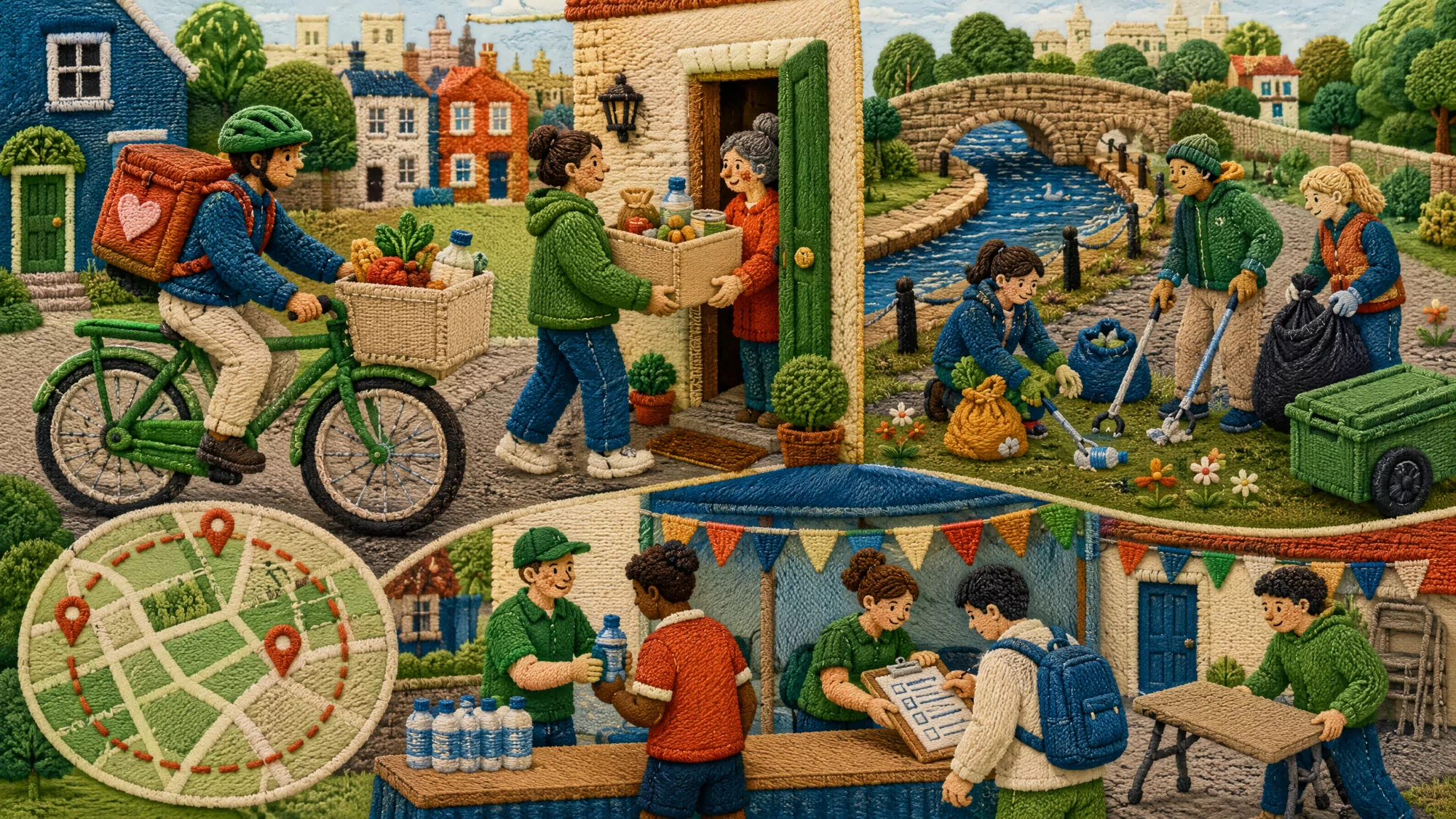
Food distribution is the clearest example of this model. Mutual aid pantries, community larders, and surplus food networks like the Felix Project or regional FareShare hubs regularly run into unexpected dispatch shortages. An on-demand volunteer answers a phone alert, picks up three packed boxes, and drops them off at doorsteps within walking or cycling distance. Confirming deliveries via a quick photo or mobile form keeps emergency provisions moving without locking you into ongoing operational ties.
Neighbourhood cleanups follow the same modular setup. You join a 45-minute street or waterway sweep organised by a local residents’ group without committing to future work. Organisers distribute gloves and litter-pickers on site, participants clear a specific canal towpath or park boundary, and the council collects the sorted refuse from an agreed pickup point.
Ad-hoc event support covers temporary logistical crunches. Community halls and grassroots sports fixtures often need extra hands for a single 90-minute shift to set up folding tables, hand out water, or check attendee registration badges. You complete the physical work, hand back the checklist, and step away without any ongoing obligation.
Leveraging Digital Networks for Community Discovery
Finding short-notice civic opportunities used to rely on word-of-mouth or static charity registries. Traditional databases still list broad roles uploaded months earlier, leaving you to email coordinators and wait days for a reply. By the time someone responds, the immediate need has often passed or your free window has closed. That lag alone turns away professionals whose schedules shift from week to week.
Dedicated community platforms cut through that delay with direct, local matchmaking. Networks like GardenOfLove borrow familiar feed formats to link UK residents with grassroots projects nearby. Instead of searching outdated vacancies, you browse an active feed updated by community organisers, mutual aid groups, and small neighbourhood charities posting time-sensitive requests.
Filters focus strictly on location and practical skills. You enter your postal code and select what you can offer, whether that means spreadsheet auditing, translation, or access to a car. When a community garden needs three people to unload compost on Saturday morning, or a refugee support group needs help formatting an advice leaflet before printing, the request lands directly in your view.
Direct messaging removes the back-and-forth across email chains. You confirm task details directly with the organiser, clarify questions in the chat thread, and agree on the deliverable right away. Platforms like GardenOfLove keep these exchanges focused on concrete action rather than open-ended volunteering. Once the work wraps up, both sides confirm completion inside the thread, leaving a clean operational record without waiting on central administration.
Integrating Micro-Action into Daily Schedules
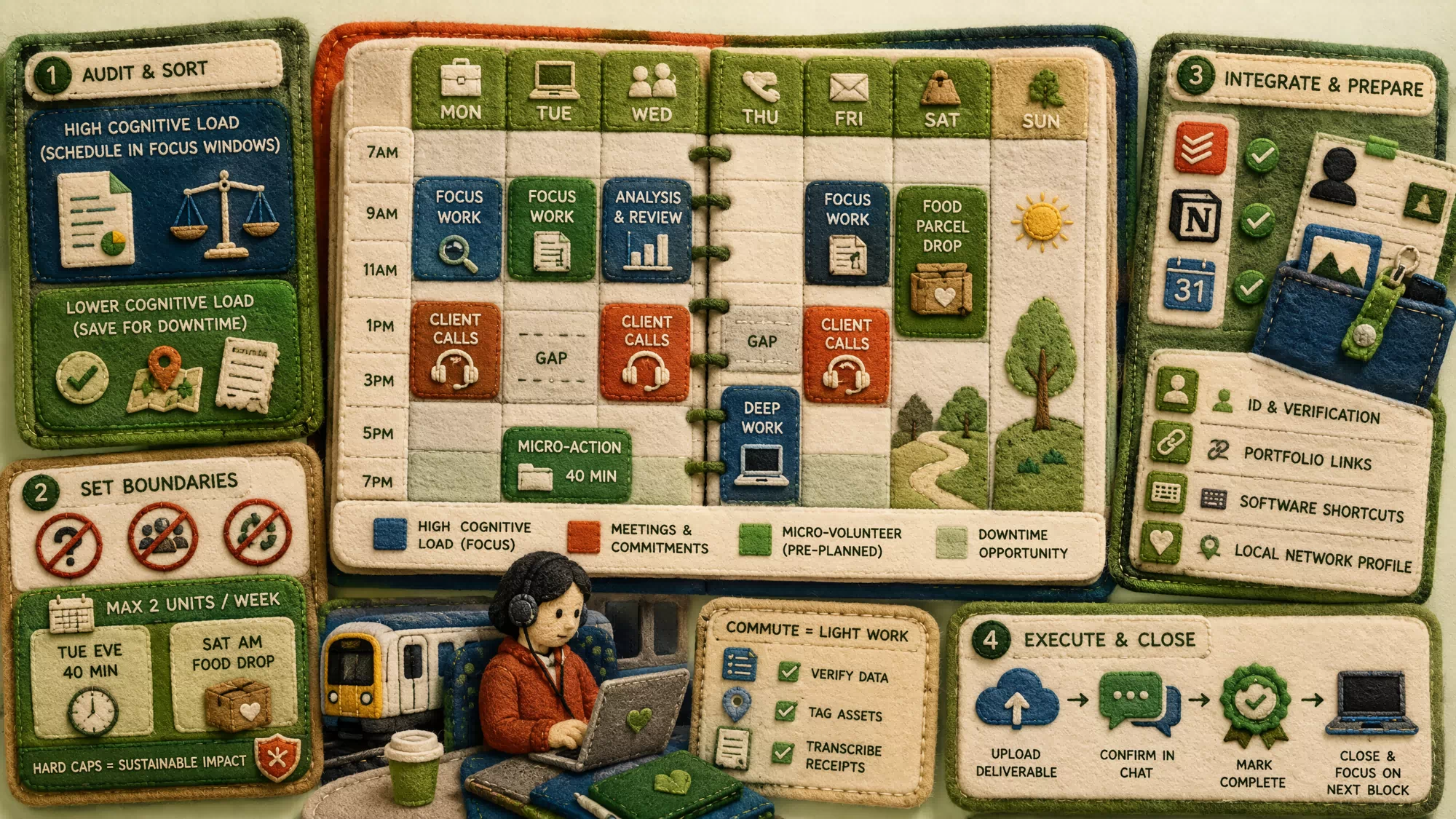
Audit your weekly calendar for predictable pockets of downtime. A twenty-minute Thameslink delay, the gap between client calls, or a Saturday morning train ride can easily accommodate focused administrative or analytical work. Treating these intervals as functional blocks means sorting tasks in advance by cognitive load. Reserve demanding briefs, like reviewing legal advisory leaflets or drafting grant copy, for morning focus windows. Save lighter work, such as verifying postcode data, tagging map assets, or transcribing scanned donation receipts, for commutes when mental fatigue sets in.
Set strict boundaries so micro-tasks do not creep into ongoing commitments. Decline any brief that lacks an explicit deliverable, an exact file format, or an estimated completion window under sixty minutes. If an organiser asks for open-ended strategy consultations or invites you to a recurring planning call, turn it down; those formats require committee-style involvement that conflicts with a tight schedule. Cap your participation at two self-contained units per week, such as forty minutes on Tuesday evening and a single food parcel drop on Saturday morning. Hard caps prevent volunteer burnout and protect your professional focus.
Integrate assignments directly into your existing productivity setup. Treat civic tasks like routine work sprints inside tools like Todoist, Notion, or Google Calendar, giving them the same operational discipline as client deliverables. Prepare your digital workspace in advance by storing proof of identity, professional portfolio links, and standard software shortcuts in an accessible note. Maintaining an active profile on local discovery networks like GardenOfLove also ensures you can claim an urgent nearby ticket without repeating onboarding steps. When your scheduled block ends, upload your deliverable, confirm completion in the platform chat thread, and close the browser tab.
Conclusion
Thirty-minute contributions aggregate into genuine operational capacity across UK communities. When two hundred people each spend twenty minutes validating records, sorting surplus stock, or checking translated advice notices, a grassroots charity can clear a multi-week administrative backlog over a single weekend. Absorbing that operational drag frees frontline caseworkers to spend their working hours supporting clients directly instead of untangling spreadsheets or fixing database errors.
Engaging with community networks on this modular basis keeps civic support viable alongside a demanding career. You sidestep the familiar cycle of committing to recurring weekly shifts, falling behind under workplace pressure, and dropping out entirely. Routing small, defined assignments through platforms like GardenOfLove provides neighbourhood initiatives with reliable access to technical skills and local physical help. Select an open brief that matches your location, finish the work during your available window, and submit the deliverable.
