Why Willpower Fails Against Algorithms: The Case for Purpose-Driven Social Networks
Rebuilding Digital Wellbeing Through Purpose-Driven Social Networks
Prolonged exposure to algorithmic feeds steadily drains attention and fractures daily focus. Willpower alone cannot counteract software built on variable behavioral conditioning. Achieving digital wellbeing requires fundamental architectural change: platforms must prioritize psychological stability over advertising revenue, measuring success through purposeful collaboration and clear boundaries for offline recovery.
The Mechanics of Social Media Addiction and Modern Isolation
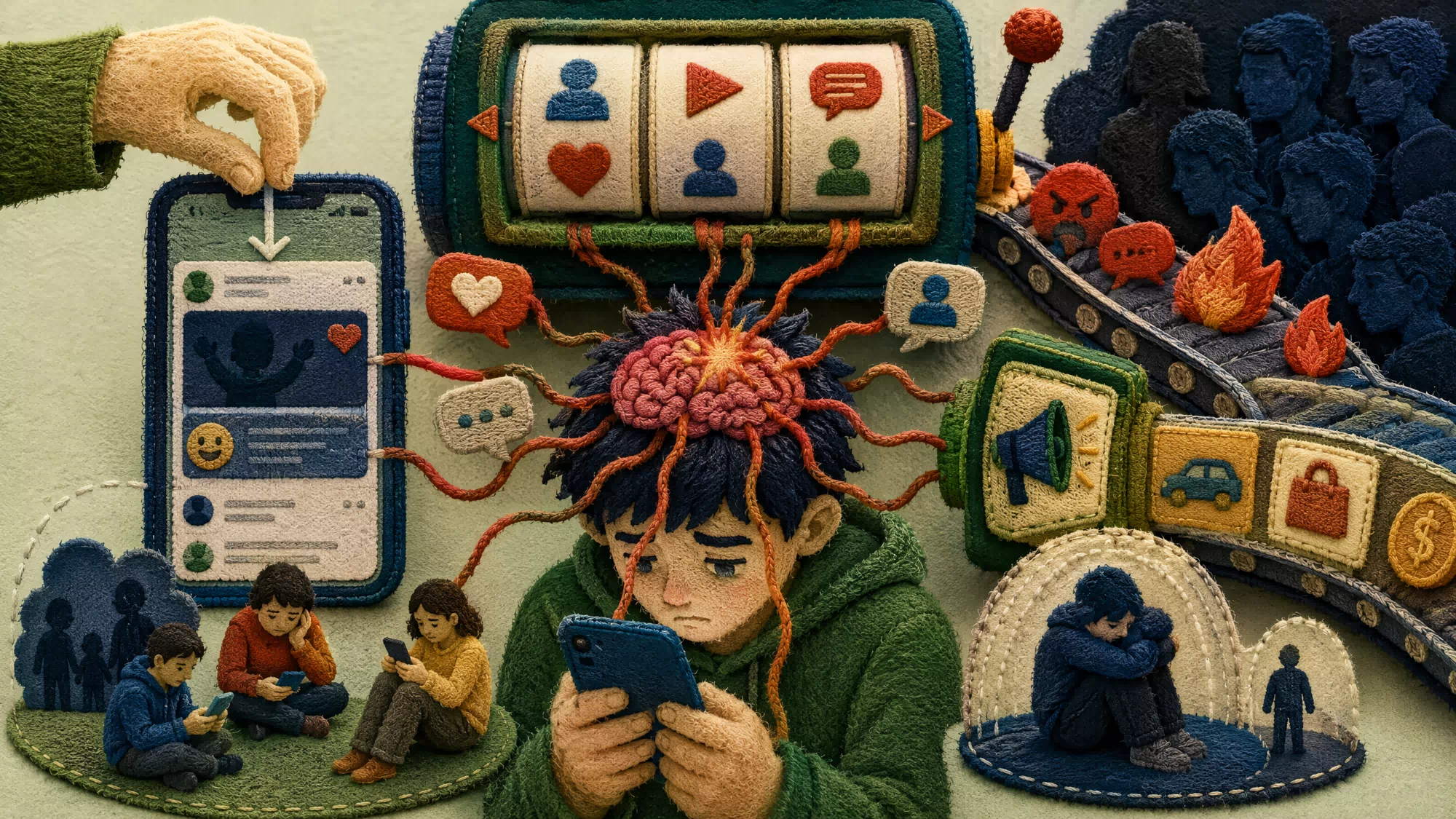
The pull-to-refresh gesture operates on the exact intermittent reinforcement schedule that powers casino slot machines. B.F. Skinner identified this variable ratio schedule as psychology’s most potent behavioral conditioning mechanism. Every time you pull down a feed, you gamble on what arrives next: ten notifications, a viral clip, or complete silence. That unpredictability triggers an acute dopamine spike. The brain responds to the anticipation of social validation rather than the content itself, quickly turning casual browsing into compulsive addiction.
This compulsion steadily swaps genuine community for silent observation. Hours slip by watching curated fragments of other lives without exchanging a single meaningful thought. Passive scrolling strips away reciprocal warmth while sharpening social comparison, leaving users feeling simultaneously visible and unheard.
The resulting toll is starkly evident across the United Kingdom. Office for National Statistics surveys indicate that 31 percent of adults aged 16 to 29 in Great Britain experience loneliness often, always, or some of the time. Chronic loneliness now strikes young people at double the rate of retirees aged 70 and over. At the same time, National Health Service data shows mental health referrals for children and young adults reaching record highs, with over one million open cases for anxiety and depressive conditions recorded by community trusts. British adolescents who spend over three hours daily on algorithmic feeds report significantly higher rates of psychological distress than their low-frequency peers.
Commercial platforms treat this widespread isolation as an asset. Because insecurity and hostility lengthen session times, recommendation engines routinely amplify conflict-heavy threads. Automated ad exchanges then slot paid placements between these contentious exchanges, billing advertisers for impressions generated while your nervous system remains on high alert.
How to Stop Doomscrolling for Better Mental Health
Doomscrolling persists because recommendation engines treat human distress as monetizable inventory. Platforms track dwell time down to the millisecond, routing alarming headlines to your screen the moment you might leave. Stopping doomscrolling to protect your mental health requires treating cognitive attention as a finite biological reserve, replacing involuntary scrolling with deliberate choices about when and why you log on.
Cognitive Costs of Outrage-Driven Algorithms
When an algorithm prioritizes high-arousal negative content, your nervous system treats the feed as an immediate environmental threat. Because threat detection is rapid and evolutionary, the amygdala fires repeatedly in response to alarmist phrasing, moral outrage, and catastrophic imagery, flooding the bloodstream with cortisol and adrenaline. Under ordinary conditions, these hormones dissipate once danger passes. An infinite scroll removes that resolution point, locking you into a persistent state of sympathetic nervous system arousal.
This prolonged vigilance takes a direct toll on the prefrontal cortex, which governs working memory, impulse control, and long-range planning. Sustaining concentration on complex tasks becomes difficult when your brain continuously scans for incoming social emergencies. Routine decisions feel heavy, and everyday obligations produce irritability rather than focused action. Psychologists recognize this drain on cognitive bandwidth as executive dysfunction, coupled with profound emotional exhaustion. Closing the app does not bring an immediate reset; the biochemical residue of manufactured crisis lingers for hours, disrupting sleep architecture and impairing baseline emotional regulation.
Intentional Engagement as an Antidote to Passive Consumption
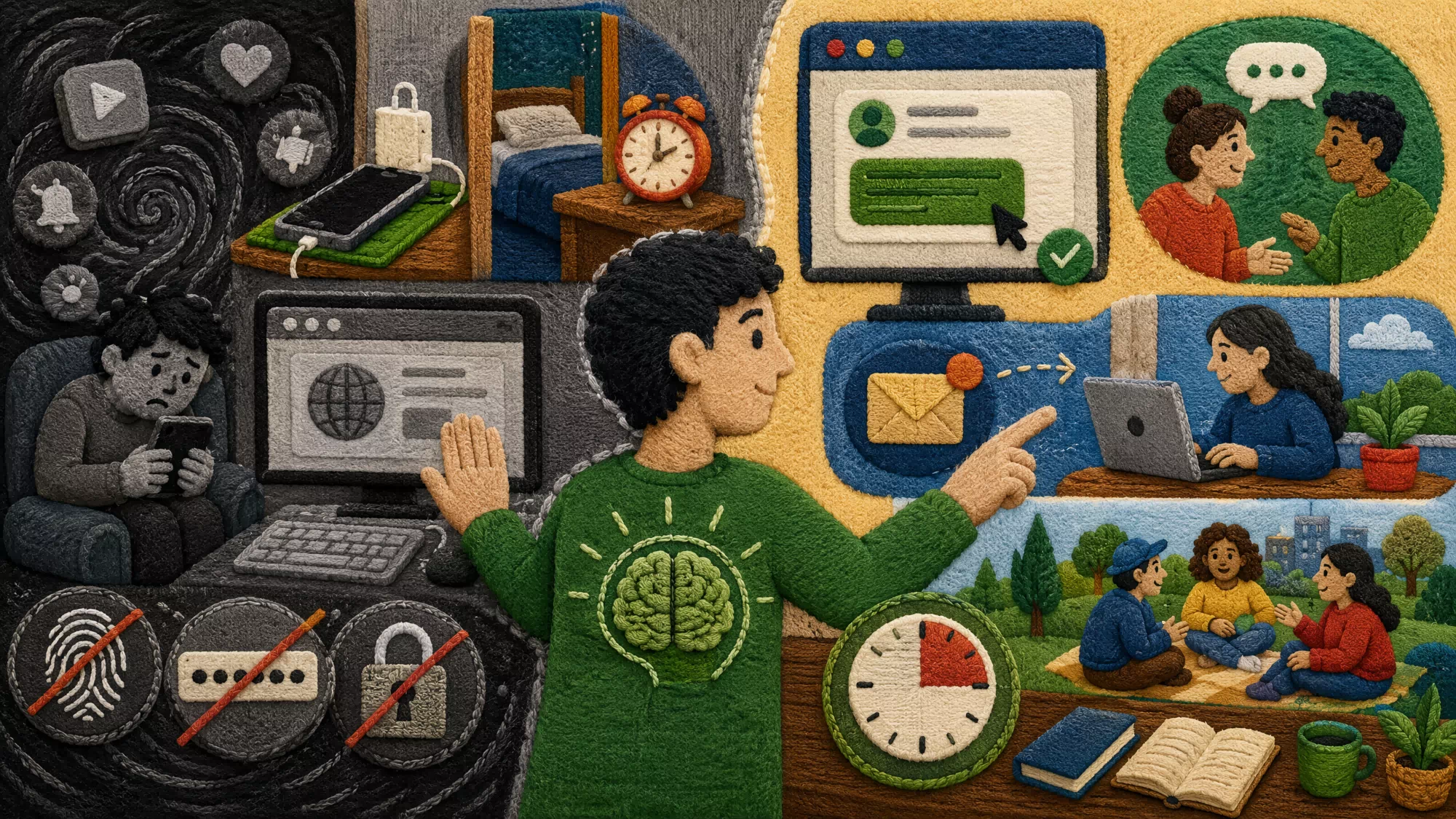
Breaking passive consumption starts with adding practical friction to your daily routine. Charge your phone outside the bedroom overnight, relying on a standalone alarm clock instead. During the day, access platforms through desktop browsers rather than native mobile apps, and switch your display to greyscale to blunt visual reward cues. Delete saved credentials and biometric logins so each session requires manually entering a password. That intentional pause interrupts muscle memory, giving your prefrontal cortex time to register intent before an automatic browsing loop takes over.
From there, shift your posture from passive absorption to deliberate contribution. Log in only when you have a defined, single-point objective, such as replying to a community organizer, answering a direct question, or posting an update on a local campaign. Finish that task and close the tab immediately. If your goal is genuine connection, send a direct message to a collaborator instead of browsing a discovery feed. Confining platform use to designated twenty-minute windows preserves cognitive energy for offline relationships and deep, unfragmented work.
Architectural Shifts Toward Proactive Digital Wellbeing
Traditional social networks rely on programmatic advertising, an economic model where human attention is packaged and sold to ad brokers. In this ecosystem, revenue scales directly with session length and impression density. Engineering teams deploy dark patterns, infinite scroll, and outrage-amplifying recommendation engines specifically to eliminate natural stopping points. When business survival depends on continuous screen time, any design choice that encourages moderation or prompts you to log off threatens quarterly earnings. Commercial platform incentives run directly counter to user mental health.
Prioritizing digital wellbeing requires replacing surveillance advertising with community-funded subscriptions, micro-contributions, or public-benefit structures. Once platform solvency is decoupled from screen time, interface designers gain the operational freedom to construct humane spaces. Platforms can establish deliberate latency, chronological feeds, and clear pagination that lets you know when you have caught up with your chosen circles. Notifications shift from speculative behavioral nudges into scheduled daily digests, cutting off persistent cognitive interruptions.
Under this architecture, vanity metrics disappear. Interfaces omit public like counts, view tallies, and follower rankings, dismantling the gamified feedback loops that drive social media addiction. In their place, humane platforms surface collaborative utilities, such as shared campaign repositories, local initiative boards, and focused discussion channels. The software measures success not by retention, but by how effectively it helps you complete a concrete objective and return to your offline life.
Purpose-Driven Ecosystems for Community Support
Platforms like GardenOfLove structure interaction around shared civic objectives. The interface directs attention toward practical community initiatives, including food bank logistics, youth mentorship, and neighborhood conservation projects. You join working groups dedicated to clear, scheduled tasks, with an emphasis on cooperative accountability that converts solitary screen time into direct, measurable assistance for people in your local area.
Campaign-Led Collaboration Over Vanity Metrics
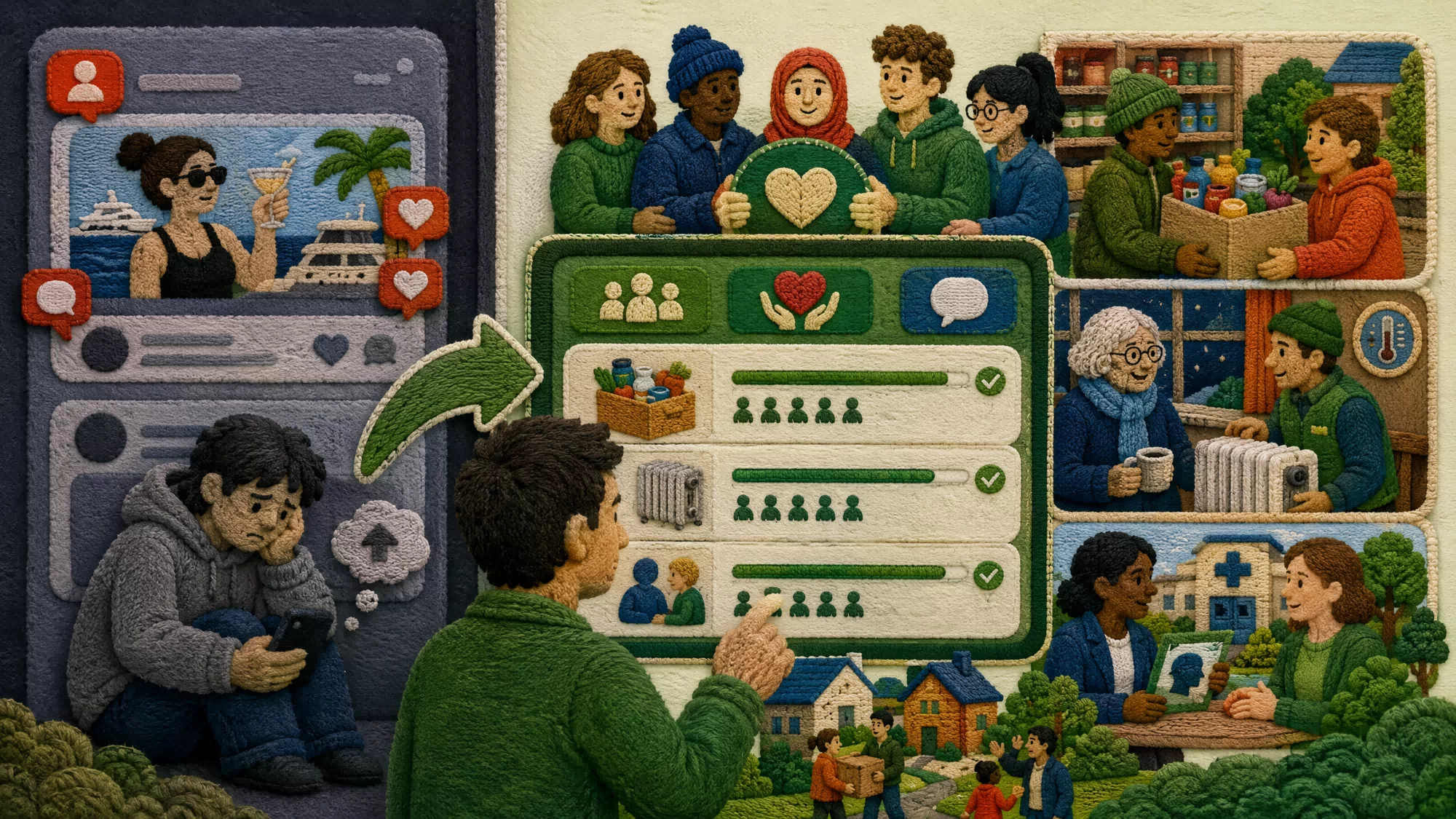
Traditional feeds train you to measure personal worth through follower tallies, comment volume, and public likes. These metrics drive constant upward comparison, nudging you to evaluate daily life against curated, broadcasted highlights. Over time, that loop fosters persistent inadequacy and quiet isolation. Campaign-based networks break this hierarchy by directing attention outward. User profiles center on cooperative civic work, linking people through practical mutual aid projects such as funding regional food larders, winter fuel grants, and local youth counseling initiatives.
Log in to support an active campaign, and the interface surfaces clear project milestones and urgent community needs. You track concrete indicators of progress: volunteer shifts scheduled, emergency supply boxes delivered, or mental health directories distributed to local NHS surgeries. This structural focus reorients your psychological reward system. Working toward a shared objective builds collective self-efficacy, replacing competitive envy with collaborative purpose. Because your time produces a tangible change in someone’s material circumstances, you regain personal agency, anchoring online activity in real neighborhood outcomes and mutual trust.
Cultivating Connection Within Dedicated Digital Gardens
Broadcast networks push millions of strangers into an unmoderated public arena, creating context collapse and constant hyper-vigilance. It is difficult to speak openly when any comment can be stripped of context and amplified to hostile audiences. GardenOfLove counters this vulnerability through dedicated, decentralized environments called Gardens. These spaces operate on a human scale by capping group sizes and shutting out discovery algorithms. Within a Garden, members hold thoughtful, asynchronous conversations centered on common interests and regional challenges.
Setting clear boundaries establishes genuine psychological safety. Participants can share personal vulnerabilities, discuss mental health struggles, and coordinate local initiatives without fearing algorithmic exposure or harassment. In regions across Britain experiencing acute isolation, bounded digital groups provide a predictable social anchor. You know who reads your words, who responds, and what collective standards govern the room. That clarity lowers social anxiety, giving quieter participants space to speak while restoring the mutual peer support missing from large-scale corporate feeds.
The Future of Meaningful Digital Connection
Social software is beginning to treat screen time as a functional utility with clear operational boundaries. As more people experience the biological toll of outrage-driven feeds, platforms have to prioritize psychological stability. Purpose-driven networks demonstrate that digital spaces can coordinate community life without depending on surveillance advertising.
That structural shift alters how engineering teams define success. Instead of tracking dwell time, healthy interfaces evaluate impact through local civic participation, verified mutual aid deliveries, and self-reported digital wellbeing. When software respects human neurological limits, it protects the hours needed for restorative sleep, focused work, and direct neighborhood relationships. Platforms fulfill their role by coordinating practical resources, dispatching volunteers to local projects, and letting you log off the moment that shared work is done.
Frequently Asked Questions
What is doomscrolling?
Doomscrolling is the act of compulsively scrolling through negative news or alarming content on social media feeds for extended periods. It occurs because recommendation engines prioritize high-arousal content to keep users engaged. This behavior locks the nervous system into a state of constant threat detection, which can lead to increased anxiety, disrupted sleep patterns, and emotional exhaustion over time.
How can I stop doomscrolling?
You can stop doomscrolling by introducing friction into your digital habits, such as removing biometric logins or using a desktop browser instead of mobile apps. Replace passive consumption with intentional engagement by logging on only for specific objectives, like messaging a friend or completing a task. Switching your phone display to greyscale and charging it outside the bedroom can also help break the automatic scrolling loop.
Why does social media feel addictive?
Social media feels addictive because platforms utilize a variable ratio reinforcement schedule, similar to a casino slot machine. Every time you refresh your feed, you do not know if you will see something engaging or mundane, which triggers a dopamine spike. This unpredictability encourages compulsive checking, as the brain begins to crave the anticipation of social validation rather than the content itself.
What are the mental health effects of excessive social media use?
Excessive social media use is linked to higher rates of psychological distress, anxiety, and depression, particularly in young adults. Prolonged exposure to algorithmic feeds keeps the brain in a state of sympathetic nervous system arousal, flooding the body with cortisol and adrenaline. This chronic vigilance impairs the prefrontal cortex, which is responsible for impulse control, working memory, and long-range planning, ultimately leading to executive dysfunction.
What is the difference between broadcast networks and purpose-driven networks?
Broadcast networks prioritize advertising revenue and session length, using algorithms to amplify conflict and keep users scrolling indefinitely. In contrast, purpose-driven networks focus on community outcomes and civic objectives rather than vanity metrics like likes or follower counts. These platforms often use subscription-based models or public-benefit structures, designing their interfaces to help users complete specific tasks and then log off, rather than maximizing screen time.
How do algorithmic feeds affect my mental health?
Algorithmic feeds impact mental health by treating human distress as monetizable inventory, often amplifying outrage to increase dwell time. Constant exposure to alarming headlines and moral outrage keeps your nervous system in a state of high alert, increasing cortisol levels. Because these feeds lack natural stopping points, you are unable to recover from this stress, which drains cognitive bandwidth and disrupts your baseline emotional regulation.
How can I create a healthier relationship with technology?
You can create a healthier relationship with technology by shifting from passive consumption to deliberate contribution. Use digital platforms only for defined objectives, such as coordinating local community initiatives or answering direct messages, and close the app immediately afterward. By setting strict boundaries, such as designating twenty-minute windows for usage and removing social media apps from your phone, you preserve cognitive energy for offline relationships and deep, focused work.
