The Transparency Mandate: How UK Charities Can Secure Gen Z and Millennial Funding
Adapting UK Charity Fundraising to the Transparency Demands of Gen Z and Millennials
UK charities face an immediate structural shift as Gen Z and Millennials expand their share of national giving. Retaining these donors means moving past annual summary reports and black-box appeals. To protect long-term revenue, non-profit leaders must align their communication models with the direct accountability younger generations expect.
The Generational Realignment in UK Charitable Giving
The multi-trillion-pound intergenerational wealth transfer across the UK is shifting donor demographics faster than most strategic plans account for. As baby boomers age out of primary giving pools, non-profits increasingly rely on younger cohorts for recurring support. Charities that fail to build early affinity with these successors risk their financial solvency within the decade.
Core Giving Priorities Among Millennial and Gen Z Donors
Millennial and Gen Z supporters judge charities by the same standards they apply to modern commercial platforms: speed, consistency, and verifiable proof. They rarely respond to broad appeals without clear evidence showing how their money drives tangible results. For these cohorts, giving sits alongside everyday ethical spending, from B Corp subscriptions to recurring micro-contributions.
Several distinct habits dictate how this demographic allocates funds across the UK:
- Cause-first giving over legacy brand loyalty. Younger donors back concrete interventions, such as emergency legal clinics or localized green energy installations, rather than general endowment reserves.
- Frictionless checkout pathways. Over 70 percent of donors under 35 complete gifts using digital wallets like Apple Pay or open-banking apps, quickly abandoning clunky multi-step forms.
- Scrutiny of operational ethics. Donors inspect executive compensation, carbon footprints, and frontline staff wages before committing to a monthly direct debit.
- Peer-to-peer verification. Recommendations from personal networks, community organizers, and third-party monitors carry far more weight than formal patron appeals or legacy direct-mail flyers.
When established charities fail to provide continuous, transparent reporting, these supporters redirect their disposable funds toward community interest companies, local mutual aid groups, or direct GoFundMe appeals.

Diminishing Returns of Traditional Canvassing and Postal Appeals
Face-to-face street canvassing (‘chugging’) and physical direct-mail drops deliver steadily diminishing returns across the UK charity sector. High agency commissions, rising print costs, and steep postal tariffs have pushed donor acquisition costs (CAC) to levels that take years to recoup. For younger audiences, these legacy channels generate friction rather than goodwill.
Street canvassing relies on high-pressure pitches that clash with how Gen Z and Millennials make financial decisions. These supporters research causes independently, compare options on their phones, and reject unsolicited sales approaches in public spaces. First-year attrition for street-acquired donors under thirty-five routinely exceeds 60 percent, which often erases any return on the upfront spend.
Direct mail runs into an equally steep structural wall. A significant share of younger donors live in shared rental housing, move frequently, and discard unaddressed mail immediately. Even personalized packs featuring emotive storytelling and paper direct debit mandates feel disconnected from daily digital workflows. Relying on quarterly print appeals signals an institutional lag that discourages digitally native supporters from giving.

The Institutional Trust Deficit in Modern Philanthropy
Younger donors approach modern charities with an ingrained skepticism toward institutional overhead. High-profile Charity Commission investigations, controversies over executive pay ratios, and aggressive third-party fundraising commissions have put under-35 supporters on guard. When twenty pounds leaves their current account, they expect to trace precisely how much capital reaches frontline programmes versus back-office administration.
That wariness reflects the information environment Gen Z and Millennials inhabit daily. Raised alongside corporate greenwashing and instant digital fact-checking, they treat glossy brochures with immediate doubt. Legacy markers of authority, including royal patronage, heritage status, or broad appeals to tradition, carry negligible weight. If an annual financial breakdown lumps 35 percent of expenditure into ambiguous buckets like “support costs” or “governance and development,” younger contributors assume financial inefficiency or poor governance.
This doubt quickly alters donor behavior. Frustrated supporters routinely cancel recurring gifts and move their disposable funds toward grassroots mutual aid initiatives, local community interest companies, or direct transfer platforms where financial records remain open to scrutiny.
Rebuilding institutional trust requires verifiable operational proof. Charities must present clear, accessible data breakdowns that demonstrate operational discipline directly at the point of contribution. When non-profits openly share administrative structures alongside direct procurement expenses, donors perceive professional maturity rather than concealment. Trust develops when financial disclosure functions as an active operating habit rather than an annual statutory filing.
Real-Time Impact Metrics as a Donor Retention Engine
Static annual impact reports fail to sustain recurring gifts from younger demographics. A fifty-page PDF published ten months after year-end feels entirely disconnected from modern digital communication. Gen Z and Millennials rely daily on banking apps, fitness trackers, and delivery platforms that provide immediate confirmation of activity and outcomes. When their charitable contributions disappear into an administrative void for twelve months at a time, monthly direct debit cancellations spike.
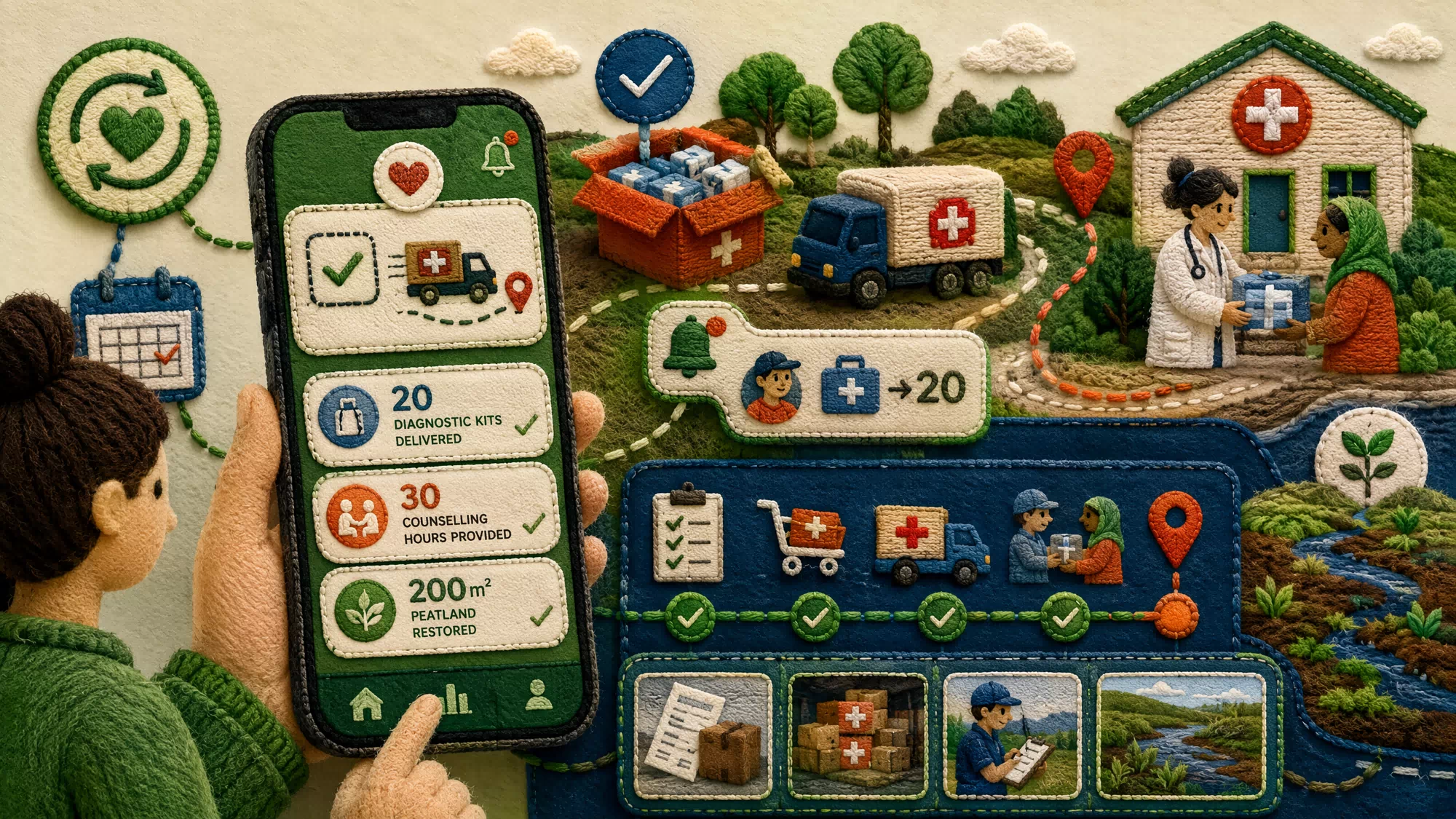
Real-time milestone tracking counters this drop-off by converting recurring gifts into a continuous sequence of verified progress. Rather than waiting for a distant year-end summary, supporters receive concise digital updates tied directly to funded work. If an organisation distributes emergency medical supplies to community clinics, an automated notification can confirm that a ten-pound gift helped purchase and dispatch twenty diagnostic kits to a designated facility in Leeds that morning.
Unit-level metrics transform how donors evaluate their ongoing commitment. Translating recurring direct debits into tangible deliverables, such as thirty hours of youth mental health counselling or two hundred square metres of restored peatland, gives each payment immediate substance. Live feeds within donor dashboards allow supporters to inspect procurement schedules, view distribution receipts, and review frontline field logs on demand.
Automated alerts triggered when campaigns reach operational milestones, such as securing essential equipment or hitting local completion targets, provide regular reinforcement. Fundraisers who replace retrospective PDFs with live milestone reporting build far more resilient monthly revenue. When a supporter sees their contribution systematically hitting targets on the ground, they stay subscribed for years because the impact of their money remains visible and verified.
Operational Strategies for Continuous Milestone Reporting
Charity operations teams often resist continuous reporting on the assumption that it requires dedicated writers or pulls staff away from frontline delivery. In reality, continuous updates rely on capturing operational data that teams already generate for internal monitoring. Integrating existing project management tools and field databases directly with donor communication channels turns routine administrative sign-offs into donor-facing progress markers without creating extra paperwork.
Setting up a standardized field-logging routine captures project outputs right at the source. Programme officers complete a two-minute digital form on their mobile devices during scheduled site visits, recording three precise items:
- The completed operational task, such as five hundred saplings planted or six youth training sessions completed.
- A time-stamped photo or supplier invoice verifying the expense.
- The specific geographic location or facility receiving the resources.
A central programme manager then runs a weekly fifteen-minute validation review in the CRM queue to approve pending field submissions. Once cleared, the system automatically parses these entries, maps them against specific project cost codes, and publishes live micro-updates directly to supporter feeds. This structured pipeline bypasses the need for bespoke graphic design, quarterly print proofs, and manual mailing lists.
Tagging contributions to specific cost centres at the point of donation anchors this automated workflow. When supporters allocate their monthly direct debit to an emergency medical clinic or local river restoration, their donor profile links directly to that project ledger. As field teams log procurement receipts and equipment dispatches against that code, the platform recalculates unit-level completion figures and displays verified inventory updates on the donor dashboard.
Conclusion
The demographic shift across UK philanthropy is permanent. Gen Z and Millennial donors reject broad institutional appeals, demanding granular expenditure data and real-time operational transparency before committing recurring funds. Continuing to rely on postal campaigns, street canvassing, and retrospective annual reviews simply accelerates donor attrition while pushing acquisition costs to unsustainable levels.
Modernising accountability infrastructure gives charities an immediate operational advantage. Leaders who introduce open-ledger tracking, unit-level impact metrics, and automated milestone updates protect recurring income against demographic drop-off. Connecting frontline delivery directly to donor-facing reporting platforms gives younger supporters the verifiable proof they expect, securing dependable monthly direct debits as the UK’s intergenerational wealth transfer accelerates.
Frequently Asked Questions
What do Gen Z and Millennial donors look for in a UK charity?
Younger donors prioritize transparency, speed, and verifiable evidence of impact over traditional brand loyalty. They expect charities to function like modern digital platforms, offering frictionless donation pathways, clear operational ethics, and proof of how their money drives tangible results. Unlike older generations, they frequently scrutinize executive compensation and administrative overhead, and they prefer peer-to-peer recommendations or grassroots initiatives over traditional institutional appeals.
Why are traditional fundraising methods like street canvassing failing with younger donors?
Traditional street canvassing and direct mail often fail with younger demographics because they create friction rather than engagement. Gen Z and Millennials prefer researching causes independently online and reject high-pressure, unsolicited sales tactics. Furthermore, high acquisition costs for these methods are difficult to recoup due to high attrition rates, as younger donors are less likely to respond to generic appeals or physical mail sent to frequently changing rental addresses.
How can UK charities provide the transparency younger donors expect?
Charities can build trust by providing granular, real-time data that links donations to specific outcomes. Instead of relying on annual reports, organizations should implement automated systems that show donors exactly how their contributions are being spent, such as unit-level metrics for specific projects. Openly sharing administrative structures, procurement expenses, and live progress updates demonstrates operational discipline, which directly addresses the skepticism younger supporters often feel toward institutional overhead.
Why are real-time impact metrics important for donor retention?
Real-time impact metrics are crucial because they convert recurring gifts into a continuous sequence of verified progress, preventing donors from feeling their money has disappeared into an administrative void. By using digital updates to confirm tangible outcomes, such as the purchase of specific equipment or the completion of local services, charities provide the immediate feedback that younger, digitally native donors expect, which significantly increases the likelihood of long-term subscription retention.
How can charities implement continuous reporting without increasing staff workload?
Charities can implement continuous reporting by integrating existing operational data directly into donor communication channels. By setting up standardized field-logging routines where staff record completed tasks, expenses, and locations via mobile devices during site visits, organizations can automate the update process. This data, once validated by a programme manager, can be parsed by a CRM to publish live updates, eliminating the need for bespoke graphic design or manual reporting workflows.
