The New Fundraising Mandate: Why Donors Demand Transparency and Frictionless Tech
Donor Behavior Shifts Toward Transparent Digital Giving Platforms
Donor scrutiny is reshaping how nonprofits design their fundraising operations. As interactive payment tools replace direct mail and static appeals, organizations face supporters who evaluate charities through live financial tracking and one-tap checkout channels. Digital platforms have established the baseline for proving operational integrity to the public.
The Digital Transformation of Philanthropic Giving
Individual supporters increasingly evaluate charitable gifts with the same scrutiny they apply to commercial purchases. Traditional fundraising methods, including postal appeals, paper pledge forms, and static direct debits, struggle to meet this expectation. They delay payment acknowledgments and obscure administrative cost ratios, introducing hesitation at the point of donation. Moving to direct digital channels provides supporters with the immediate visibility they need to make informed giving decisions.
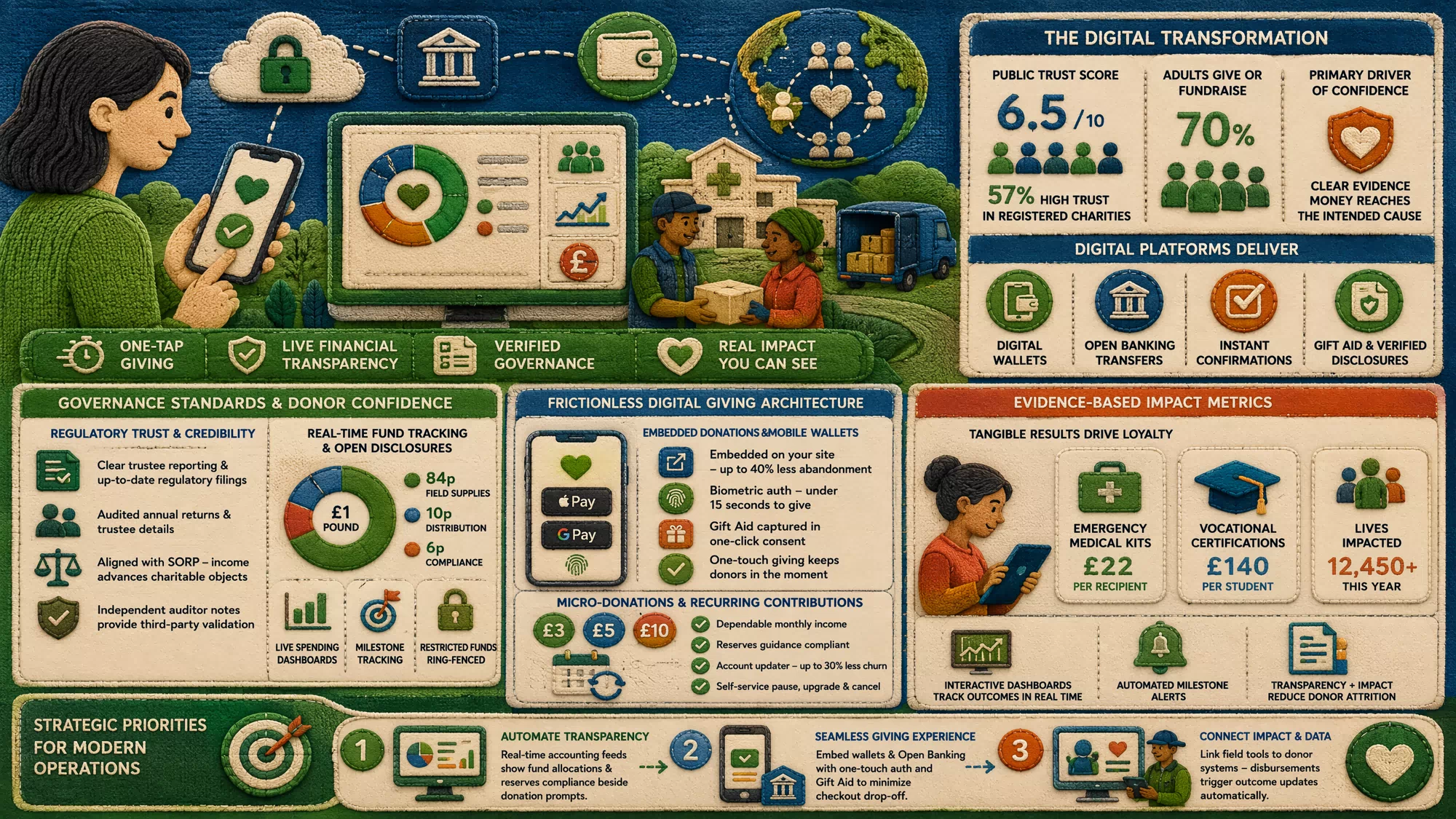
Data from the Charity Commission reinforces how heavily transparency influences public giving in the United Kingdom. The regulator reports an overall public trust score of 6.5 out of 10, with 57 percent of respondents expressing high trust in registered charities. While 70 percent of adults participate in charitable giving or fundraising, the Commission found that clear evidence of expenditure remains the primary driver of public confidence. More than six in ten people affirm that knowing their money reaches the intended cause dictates their decision to donate.
Digital platforms address this demand by linking quick payment processing directly to financial reporting. Supporters favor digital wallets, Open Banking transfers, and embedded donation portals because they deliver instant confirmations alongside project updates without administrative delay. Contributors can inspect governance records right before completing a gift. Integrating digital Gift Aid declarations and verified expenditure data directly into checkout workflows minimizes drop-off while satisfying statutory disclosure standards set by the Charity Commission.

Governance Standards and Donor Confidence
Donors examine governance credentials well before committing funds to a campaign. Clear trustee reporting, up-to-date regulatory filings, and explicit ethical guidelines remove uncertainty around internal controls. Demonstrating verifiable compliance with statutory standards turns one-off interest into sustained philanthropic support across every channel.
Regulatory Trust Metrics and Institutional Credibility
Charity Commission research on public trust shows that donor confidence drops sharply when non-profits fail to explain their operational expenditures. Over 60 percent of donors view clear breakdowns of administrative and fundraising overhead as a primary condition for their financial support. For substantial gifts in particular, contributors seek verified justifications for staff compensation, technology infrastructure, and third-party platform fees before finalizing commitments.
Institutional credibility depends on making statutory filings and governance records directly accessible to prospective supporters. Embedding verified data from your Charity Commission register entry, publishing audited annual returns, and listing trustee details alongside donation prompts satisfies public expectations for ethical oversight. Aligning financial presentations with the Commission’s Statement of Recommended Practice (SORP) confirms that incoming revenue directly advances stated charitable objects. Independent auditor notes published alongside annual return figures provide third-party validation that shields the organization from reputational scrutiny, reassuring individual donors and grantmakers that strict fiscal controls govern every active program.
Real-Time Fund Tracking and Open Financial Disclosures
Annual PDF reports published months after year-end leave donors uninformed during active appeals. Modern contributors expect immediate verification of how their money is allocated and spent. Connecting core accounting systems directly to public dashboards through secure API feeds provides live visibility into operational spending as funds disburse.
Interactive tracking interfaces replace broad percentage estimates with verifiable operational data. For instance, a campaign dashboard can show that 84 pence of every pound directly purchases field supplies, while 10 pence covers regional distribution and 6 pence supports statutory compliance. Linking project milestones to automated accounting feeds allows donors to see when specific capital targets are met and equipment procurement begins. Open financial ledgers also allow supporters to inspect restricted fund balances, confirming that designated gifts remain ring-fenced for their intended charitable projects. Displaying these itemized expenditure records within post-donation confirmations reinforces operational credibility and resolves governance questions before supporters complete their giving cycle.

Frictionless Digital Giving Architecture
Donation abandonment spikes whenever checkout workflows demand excessive data entry and multi-page forms. Modern giving infrastructure strips away these barriers using pre-filled authentication, instant bank authorizations, and low-latency mobile interfaces. Simplifying transaction pathways protects donor intent, creating direct touchpoints for future campaign engagement across an organization’s digital presence.
Embedded Donation Systems and Mobile Wallets
Redirecting supporters away from your primary website to third-party payment portals increases checkout abandonment by as much as 40 percent. Embedded donation widgets keep contributors within your content environment instead, preserving contextual trust and engagement. Allowing donors to complete a gift directly on the campaign page lifts conversion rates across both desktop and mobile devices.
Native mobile wallets like Apple Pay and Google Pay remove the friction of manual card input and billing address fields. Using biometric authentication, such as Face ID or fingerprint scanning, cuts transaction times from two minutes down to under fifteen seconds. That speed prevents drop-off during urgent disaster appeals and mobile campaign drives. Modern embedded checkout forms can also capture UK Gift Aid declarations through a single-click consent box, securing 25 percent in basic rate tax recovery without separate paperwork. Integrating these one-touch payment paths directly into campaign pages helps prospective donors follow through on their intent before distractions set in.

Micro-Donations and Automated Recurring Contributions
Subscription-style micro-donations give charities dependable monthly revenue while lowering entry barriers for individual givers. Rather than relying solely on irregular, large gifts, non-profits increasingly prompt recurring pledges of £3, £5, or £10 through automated debit channels and continuous payment authorities. This approach appeals directly to younger demographics and budget-conscious supporters who prefer modest monthly contributions over lump-sum outlays.
Consistent recurring income insulates operational budgets from the seasonal swings typical of year-end campaigns. With a dependable base of monthly micro-donors, financial planners can forecast cash flow with greater accuracy and maintain Charity Commission reserves guidance without resorting to emergency appeals. Modern recurring payment platforms also feature account-updater services that refresh expired card details automatically, cutting involuntary churn by up to 30 percent. Pairing this with self-service pause and upgrade options keeps supporters in control of their giving and curbs voluntary cancellations.
Evidence-Based Impact Metrics in Donor Communications
Charity Commission research shows that tangible evidence of impact stands alongside financial transparency as a primary driver of public trust and donor loyalty. More than 60 percent of donors state that seeing clear results directly influences their decision to give again. Supporters treat purely emotional appeals with skepticism, looking for quantifiable outcome measures before committing long-term funding. They expect operational data that ties every pound directly to concrete results in the field, not generalized statements of intent.
Retaining donors means embedding concrete performance metrics across all post-transaction communications. Instead of sending generic annual newsletters, reporting workflows should highlight specific unit-cost measures, such as emergency medical kits at £22 per recipient or vocational certifications at £140 per student. These granular breakdowns show contributors exactly what their funding achieves. Linking field monitoring tools directly to donor management systems also enables automated milestone alerts when project targets are met, confirming how incoming capital is deployed.
Interactive impact dashboards give supporters a way to track programmatic outcomes independently, checking performance across multi-year grants and giving cycles. Displaying these quantitative evaluations next to statutory data from your Charity Commission register entry reinforces institutional accountability. Replacing subjective appeals with verifiable milestones sharply reduces attrition among high-value supporters. Donors who receive regular, metric-driven updates maintain recurring monthly pledges at higher rates, providing predictable working capital for long-term charitable projects.
Strategic Priorities for Modern Fundraising Operations
Modernizing fundraising operations means connecting front-end donation tools directly with statutory reporting and live transparency systems. An effective operational roadmap establishes clear data pipelines between checkout gateways, core accounting ledgers, and public accountability dashboards.
Organizations should start by configuring automated accounting feeds that publish real-time fund allocations and show compliance with Charity Commission reserves guidance right beside donation prompts. Next, integrate embedded mobile wallets and Open Banking protocols across campaign landing pages, pairing one-touch authorizations with digital UK Gift Aid capture to minimize checkout abandonment. Finally, connect field management tools directly to donor management platforms so that capital disbursements automatically trigger outcome updates when key project milestones are reached.
Addressing these technical priorities removes friction between financial oversight, regulatory disclosures, and donor engagement. Linking transaction processing directly to annual return data and verified field results keeps administrative overhead low while maintaining full compliance with Charity Commission benchmarks across every campaign.
Frequently Asked Questions
Why is transparency important for non-profit fundraising?
Transparency builds donor trust by proving that funds reach intended causes. Over 60 percent of donors require clear breakdowns of administrative and fundraising overhead before donating. When charities provide real-time financial tracking and verifiable expenditure data, they validate their operational integrity. This openness shifts donor perception from skeptical to confident, turning one-off interest into long-term financial support.
What is the benefit of using embedded donation systems?
Embedded donation systems allow contributors to complete gifts directly on your campaign page without being redirected to third-party payment portals. This approach keeps donors within your branded content environment, which preserves contextual trust and significantly improves conversion rates. By removing the need to navigate away, you lower checkout abandonment rates by as much as 40 percent, ensuring a smoother transaction experience for both desktop and mobile users.
How do mobile wallets increase donor conversion rates?
Mobile wallets like Apple Pay and Google Pay increase conversion by eliminating the friction of manual card entry. By using biometric authentication such as Face ID or fingerprint scanning, these tools cut transaction times from minutes to seconds. This speed is crucial for urgent disaster appeals and mobile campaigns, where potential donors might otherwise abandon the process due to the hassle of inputting payment details or billing addresses.
What are the advantages of recurring micro-donations?
Recurring micro-donations, such as monthly pledges of £3 to £10, create a dependable stream of revenue that insulates non-profits from seasonal fundraising swings. This model is particularly appealing to younger and budget-conscious supporters who prefer smaller, manageable contributions over large, irregular lump sums. Automated recurring payments also reduce involuntary churn, allowing financial planners to forecast cash flow with greater accuracy and maintain necessary reserve levels more effectively.
How can charities prove their impact to donors?
Charities can prove their impact by replacing subjective emotional appeals with concrete, quantifiable performance metrics. Donors look for specific unit-cost measures, such as the cost to provide one emergency medical kit or one student certification. Linking field monitoring tools to donor management systems allows organizations to send automated milestone alerts when project targets are met, providing verifiable evidence that funds are directly achieving the stated charitable objectives.
Why should non-profits use real-time financial tracking?
Real-time financial tracking replaces static, outdated annual PDF reports with live visibility into how funds are allocated and spent. By connecting accounting systems to public dashboards, donors can see exactly how their contributions are distributed across field supplies, distribution, and compliance. This level of openness resolves governance questions immediately and builds institutional credibility, as supporters no longer have to wait months to confirm that their money reached the intended project.
What is the role of Charity Commission standards in donor trust?
Charity Commission standards serve as a benchmark for institutional credibility and ethical oversight. Donors increasingly expect charities to publish up-to-date regulatory filings, audited annual returns, and detailed trustee information. When an organization demonstrates verifiable compliance with these statutory standards, it shields itself from reputational scrutiny. Aligning financial presentations with these regulatory frameworks confirms that incoming revenue is being managed responsibly, which is a primary condition for securing substantial gifts.
What is the difference between traditional fundraising and digital giving platforms?
Traditional fundraising relies on postal appeals, paper forms, and static debits, which often obscure administrative costs and delay payment acknowledgments. In contrast, digital giving platforms offer immediate visibility, one-tap checkout, and automated acknowledgments. Digital tools link payment processing directly to financial reporting, allowing donors to inspect governance records and expenditure data in real-time, which reduces hesitation and creates a more transparent, user-friendly experience for modern supporters.
