Beyond Mass Appeals: How AI Precision and Community-Centric Giving Unlock Retention
AI, Hyper-Personalization, and the Rise of Community-Centric Giving
Fundraising in 2026 centers on three interconnected capabilities: predictive data systems, individualized donor journeys, and active community spaces. With donor acquisition costs climbing across traditional channels, organizations that pair machine learning insights with participatory, peer-led networks are securing stronger retention and building lasting recurring support.
The 2026 Fundraising Shift: Algorithmic Precision Over Mass Appeals
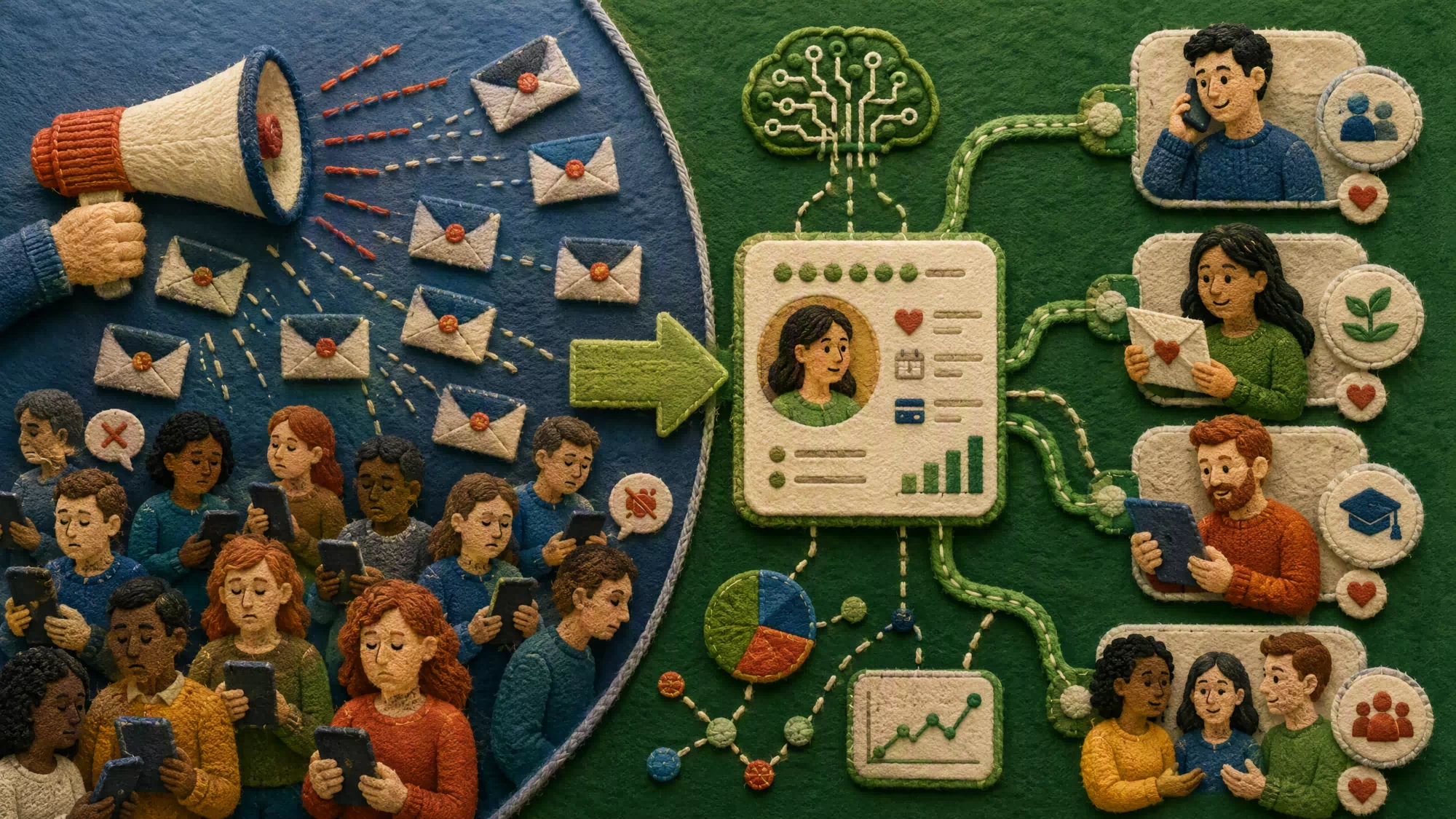
Broadcasting generic appeals to an entire email list has become an expensive liability. Open rates on quarterly newsletter blasts routinely fall below 15 percent, while donor acquisition costs on traditional paid social channels have climbed by more than 40 percent over the past three years. Supporters quickly tune out repetitive solicitations that treat a five-dollar monthly donor identically to a five-thousand-dollar capital campaign prospect.
Algorithmic segmentation replaces this batch-and-blast routine with practical precision. By training classification models on giving frequency, interaction timestamps, payment methods, and content engagement, teams can predict whether a supporter is likely to give within a specific 30-day window. Machine learning models assign real-time propensity scores to individual contact records. When the system identifies a mid-tier supporter whose behavior signals an impending upgrade, the CRM triggers a personalized pitch with ask tiers calibrated to their actual giving capacity.
That precision directly reduces donor fatigue. Instead of dispatching eight mass solicitations a year, fundraising teams send three targeted interventions tailored to individual motivations. Early adopters of automated ask strings and timing optimization report conversion increases of 22 to 35 percent compared to static segments.
This shift reaches well beyond email. Smart segmentation helps teams decide when a major gifts officer should pick up the phone for a personal conversation, and when a supporter is better guided toward peer-led micro-communities. Donors engage far more reliably when communication reflects their demonstrated cause affinities rather than an organization’s rigid broadcasting calendar.
Predictive Modeling and Dynamic Supporter Journeys
Modern predictive engines process real-time behavioral data to pinpoint the right moment, channel, and ask amount for every donor interaction. Models continuously pull data from site visits, email engagement, volunteer sign-ups, and localized economic trends to build multi-dimensional supporter profiles.
Dynamic ask arrays put this modeling into practice immediately. Standard donation buttons ($25, $50, $100) default to a lowest common denominator, capping gift sizes from supporters with greater financial capacity. Instead, predictive algorithms compute customized gift tiers in milliseconds. If a supporter who regularly gives $75 during emergency appeals reads several disaster relief updates, the checkout form can display $85, $150, and $250 options alongside a pre-selected monthly giving prompt. Nonprofits using dynamic ask strings see an 18 to 24 percent increase in average gift size over static forms.
Machine learning also guides narrative routing. Natural language processing tools identify which stories drive the highest retention across distinct supporter segments. A donor who consistently reviews financial transparency reports will see updates focused on governance and operational efficiency, while someone drawn to frontline updates receives direct testimonials from program beneficiaries.
Send-time optimization ties these elements together by moving away from arbitrary broadcast schedules. Delivery systems release messages based on each supporter’s historical window of activity, whether that falls on Tuesday at 6:45 AM or Sunday evening. Meeting donors when they are already primed to read and respond lowers unsubscribe rates significantly. By aligning timing, storytelling, and ask amounts, fundraising teams can turn passive contacts into long-term contributors without adding to staff workloads.
Decentralized Communities as the Engine for Long-Term Retention
Traditional donor databases operate as one-way transaction registries. Organizations send appeals, donors submit payments, and the interaction closes until the next solicitation cycle. That isolated loop drives high churn because supporters end up feeling connected to a payment processor rather than a living mission.
High-retention fundraising models center on decentralized community architecture instead. Within these spaces, supporters interact directly with one another, discuss project developments, and coordinate grassroots initiatives. They take on active roles by organizing local volunteer groups, contributing subject matter expertise, and introducing new participants to the cause.
When donors participate in an active ecosystem alongside staff and fellow advocates, their commitment shifts from an occasional transaction to a shared social identity. Supporters who take part in peer-to-peer discussions within cause-based spaces maintain a 48 percent higher second-year retention rate than those who only receive unilateral email newsletters.

Peer Validation and Shared Milestones in Digital Giving Spaces
Individual giving decisions rely heavily on social proof. When prospective donors see peers, colleagues, or community leaders contributing to an initiative, campaign legitimacy and urgency rise immediately. Direct appeals from an organization often lack this credibility because they come from an interested party rather than a trusted peer network.
Collaborative milestones turn solitary transactions into shared achievements. Modern fundraising platforms build on this dynamic by integrating live progress trackers, group contribution tiers, and active discussion threads. Organizing campaigns around concrete collective targets, such as equipping a medical clinic, planting a community forest, or funding a regional rescue vehicle, gives contributors a shared sense of ownership.
Demographic research indicates that 67 percent of donors under forty cite peer recommendations and visible group participation as primary factors in choosing charitable projects. Older supporters reflect a similar pattern in regional networks and alumni giving circles. When participants see peers actively contributing, asking questions, and celebrating funded phases, overall momentum accelerates. In practice, group-driven appeals with visible community milestones reach completion 31 percent faster than isolated direct mail or standalone digital landing pages.
Radical Impact Visibility Through Modern Platform Infrastructure
Supporters expect timely, verifiable proof of how their money is being used rather than waiting for an annual PDF report. Meeting that standard requires infrastructure that pairs social connectivity with verified governance and structured project reporting.
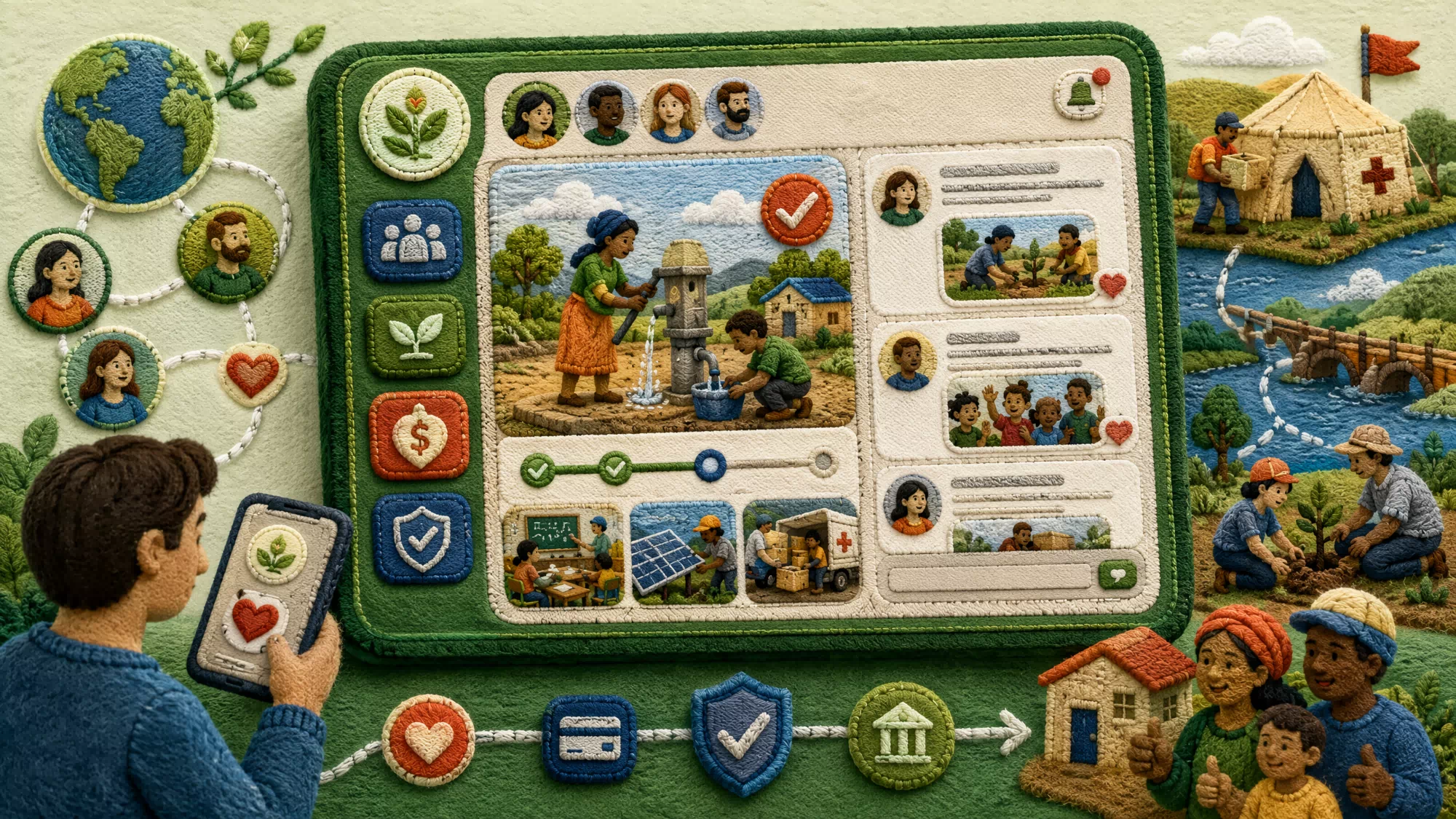
Modern social giving spaces show how this works in practice. Platforms such as GardenOfLove structure engagement around dedicated cause hubs, known as Gardens, rather than isolated fundraising pages. Within these spaces, verified nonprofits post live updates, upload field documentation, and interact directly with donors through a dedicated feed. Financial infrastructure integrates verified payment routing through systems like Stripe, transferring donations directly to vetted charitable entities while supporters track campaign progress in real time.
This model links community discussions directly to traceable project milestones. Donors follow active developments, discuss progress with other participants, and review regular field reports covering tangible outcomes, from local community initiatives to international relief operations.
Integrating fundraising with verified community spaces provides two clear operational benefits for nonprofit managers. It removes the friction of maintaining separate discussion forums alongside transactional donation forms, and it reinforces donor confidence through ongoing operational visibility. Organizations using verified community architectures retain recurring contributors at higher rates because supporters witness project execution firsthand.
Ethical Data Governance and Human-Centric Automation
Predictive models require clear boundaries to protect donor trust. When automated workflows cross into intrusive profiling or repetitive outreach, supporters quickly disengage. Sustainable retention depends on transparent data practices, clear consent protocols, and explicit respect for individual privacy preferences across every digital channel.
Fundraising teams should anchor their data architecture around three core governance measures:
- Prioritize zero-party preference data collected directly from supporters over purchased third-party behavioral datasets. Use structured intake surveys to record cause affinities, preferred communication channels, and desired outreach frequency.
- Establish human-in-the-loop review for high-value touchpoints. Predictive systems can identify timing windows and suggest ask amounts, but major gift solicitations, planned giving discussions, and sensitive beneficiary updates require direct staff oversight before dispatch.
- Provide accessible privacy controls that let supporters view and modify their data profiles. When a supporter opts out of automated recommendations, your database must purge tracking triggers within twenty-four hours.
Using automation to manage data hygiene and routine scheduling leaves fundraisers with more time for direct, unscripted donor conversations.
Strategic Imperatives for Modern Fundraising Teams
Preparing a fundraising operation for predictive personalization and community-driven giving comes down to three practical shifts.
First, unify fragmented databases into a single operational record. Clean legacy donor files, remove duplicate entries, and standardize engagement tags so predictive models train on reliable historical data rather than disjointed logs.
Second, connect transactional CRM records with collaborative community spaces. Linking payment processing directly to project hubs lets supporters follow funded milestones in real time, discuss program updates, and coordinate grassroots peer efforts.
Finally, update your core reporting metrics. Move past vanity indicators like gross email open rates in favor of cohort-based second-year retention, monthly recurring conversion velocity, and organic peer recruitment volume. Tracking these indicators ensures team budgets support long-term donor lifetime value rather than isolated, single-transaction appeals.
