Winning First-Time Donors: How Small Charities Can Build Instant Trust
Building First-Touch Donor Trust in Small Charity Campaigns
When a donor lands on your donation page for the first time, you have roughly ten seconds to show that your organization handles money responsibly. That first impression sets the baseline for future giving. Small teams often worry that without national brand recognition, prospective supporters will simply walk away.
Clarity beats prestige. Building donor trust as a smaller charity starts with removing operational ambiguity before anyone ever enters card details. Showing verifiable governance data, clear fund allocations, and secure checkout workflows establishes confidence right at the point of giving.
The Strategic Value of Immediate Credibility
First-time donors approach unfamiliar charities with natural skepticism. High-profile scandals, aggressive recurring subscription traps, and vague mission statements make prospective contributors wonder whether their money will reach actual community programs. When someone discovers a grassroots cause through social media or search, they lack the years of familiarity that protect legacy institutions. For small and midsize teams without large advertising budgets, this hesitation stalls online conversions right at the payment form.
Smaller organizations can establish authority through clear, verifiable documentation placed directly where giving decisions happen. Publishing your IRS Form 990, displaying an active Candid seal or Charity Navigator rating, and listing board members alongside their professional backgrounds demonstrate fiduciary oversight without any financial cost. Adding a physical street address, an organizational email, and a monitored direct phone line beside checkout buttons immediately sets legitimate nonprofits apart from questionable appeals.
Early administrative proof also shapes long-term donor retention. A supporter who confirms your operational integrity during their initial gift checks out with confidence. That credibility reduces friction later when you deliver post-gift receipts, share quarterly progress updates, and invite recurring monthly pledges.
Step 1: Display Direct Financial and Overhead Allocation
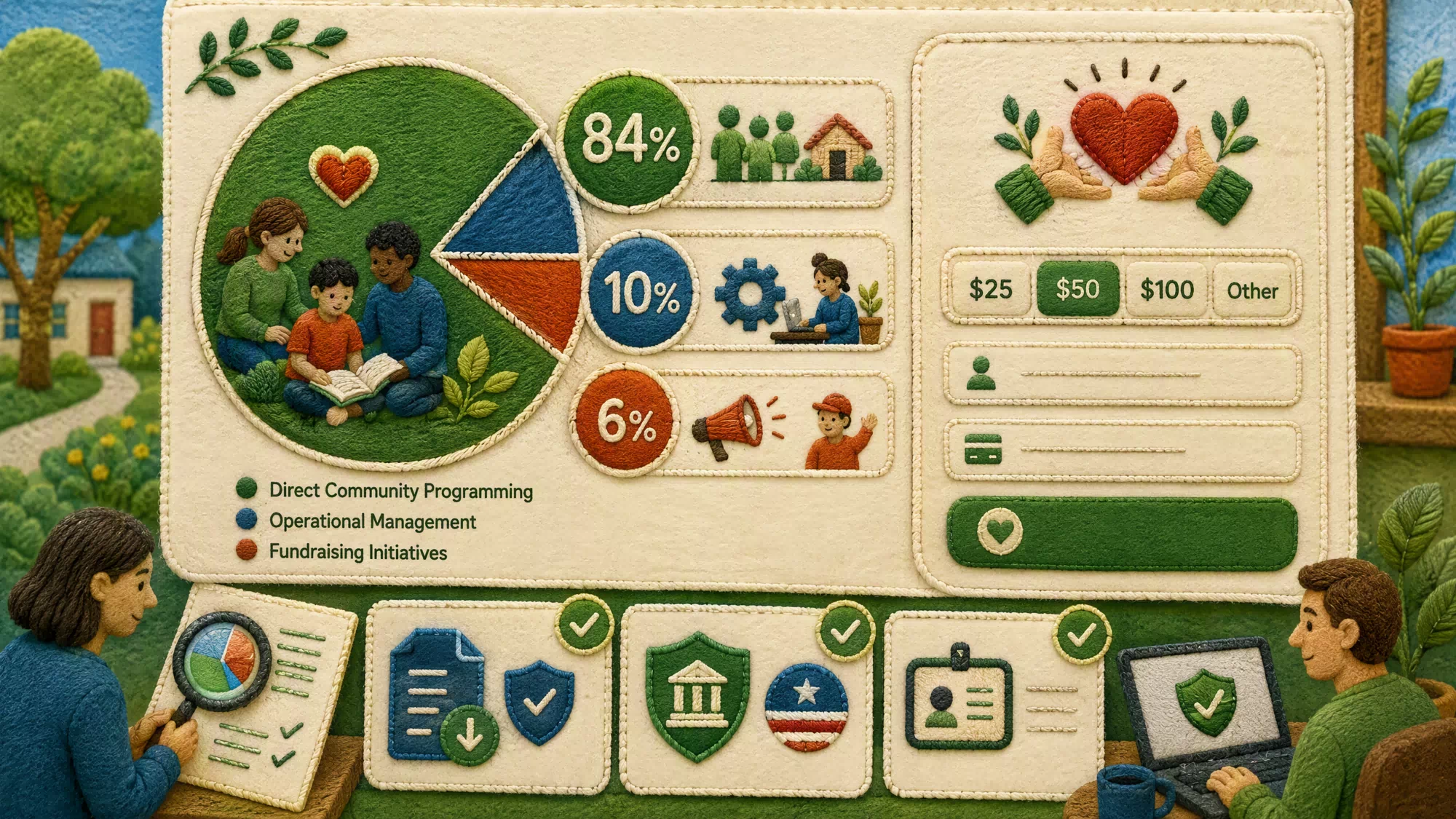
Donors evaluate how responsibly your organization spends revenue before typing in a credit card number. When a campaign page leaves overhead spending to guesswork, prospective supporters often assume high administrative waste. You can neutralize this hesitation by placing an exact financial breakdown right next to your primary donation form.
State your expense distribution clearly using verified figures from your most recent fiscal year. For instance, specify that 84 percent of expenditures fund direct community programming, 10 percent covers operational management, and 6 percent supports fundraising initiatives. A simple static graphic or a concise two-sentence summary communicates these ratios far better than complex financial charts that slow mobile page loads.
Accompany these figures with clear regulatory and operational verification points:
- A direct download link to your latest independent financial review or IRS Form 990.
- Your state charitable solicitation license registration and federal employer identification number (EIN).
- A concise note clarifying how operational funds sustain physical logistics, staff compensation, and program monitoring tools.
Small charities often hide overhead figures out of fear that any administrative cost will deter gifts. In practice, transparent organizations that explain their real operational costs gain greater trust from analytical contributors. Placing these verified records directly beneath your checkout call to action confirms that your leadership respects fiscal accountability and gives first-time supporters the objective data they need to complete their gift.
Step 2: Deploy Verified Security Indicators on Donation Pages
Online contributors abandon forms the moment payment fields appear insecure or unfamiliar. For a small charity without widespread name recognition, technical security markers serve as an immediate proxy for operational safety.
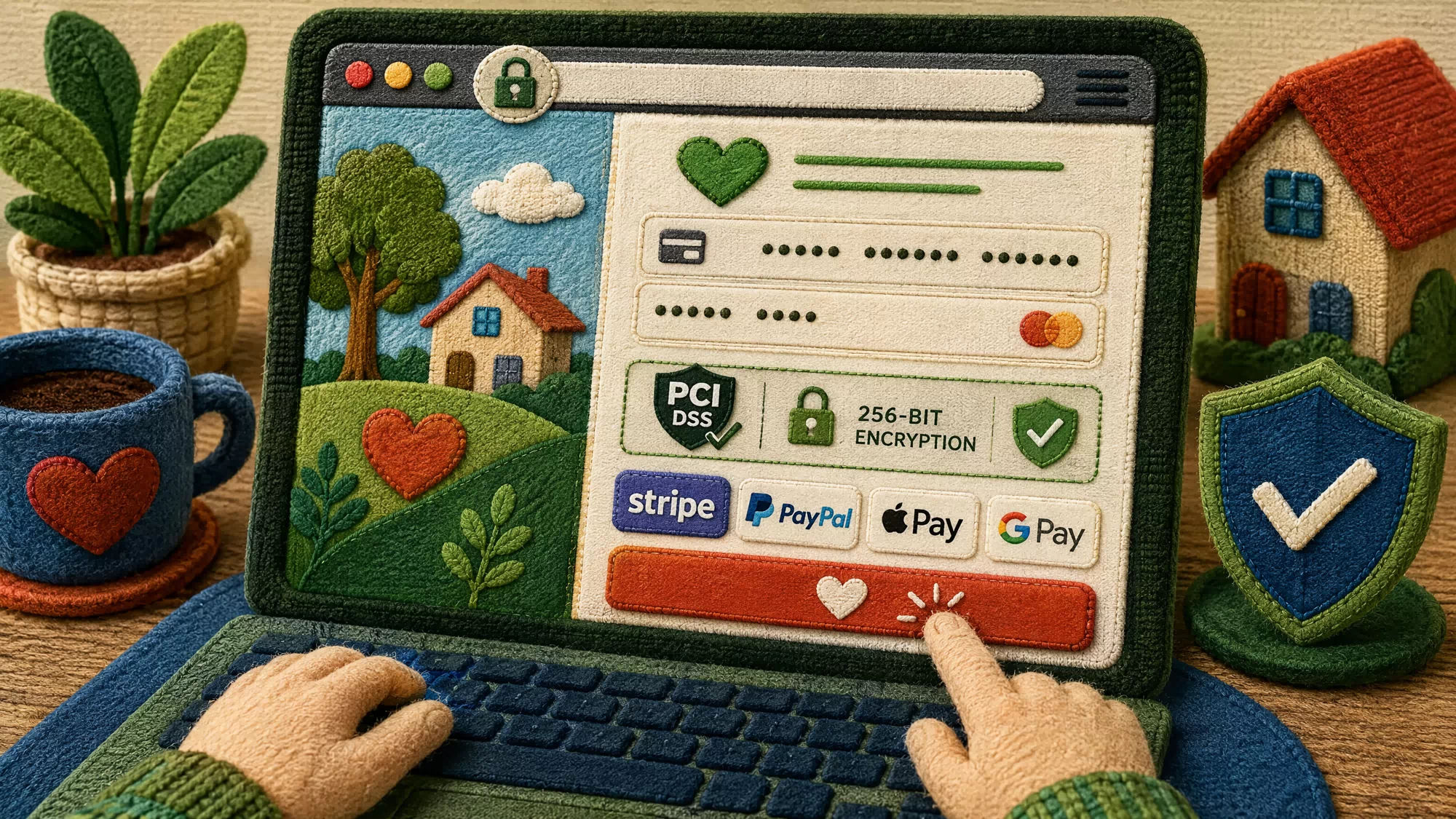
Make sure your donation page runs on an active TLS or SSL certificate, verified by the padlock icon in the browser address bar. Directly below the credit card fields, embed recognizable compliance indicators, such as a PCI-DSS badge or a clear statement confirming 256-bit encryption. These visual cues reassure donors that sensitive financial details move through protected channels rather than sitting exposed on an unmonitored server.
Payment routing is just as critical. Processing transactions through established platforms like Stripe, PayPal, Apple Pay, or Google Pay allows supporters to give through digital wallets they already trust. That integration removes the friction of typing card numbers into an unfamiliar website, lowering drop-off rates while offloading authentication to secure ecosystems. Place recognizable payment partner logos directly above your primary submit button. When contributors recognize the underlying checkout infrastructure, technical hesitation disappears and gifts go through smoothly.
Step 3: Frame Asks Around Concrete Output Metrics
Generic appeals like “support our general fund” rarely show prospective contributors how their money creates change. First-time donors want proof that their dollars produce a defined result. You can resolve that hesitation by anchoring suggested gift tiers to tangible program outputs rather than broad mission statements.
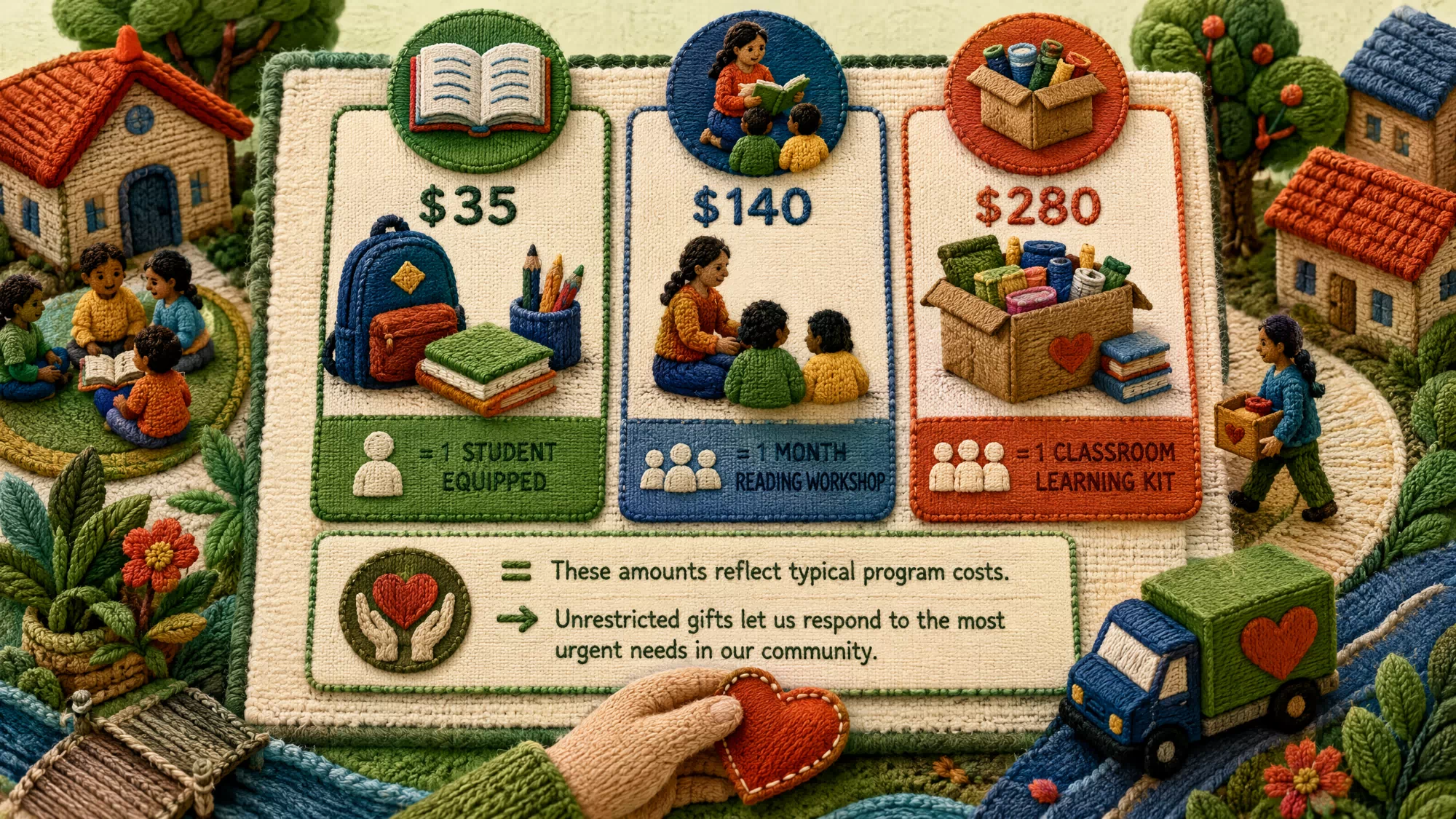
Calculate the unit economics of your core field activities. If your organization distributes educational resources, determine the real cost to assemble and deliver a complete learning kit. A donation form structured with specific amounts, such as $35 to equip one student with textbooks and supplies or $140 to fund a reading workshop for a month, builds a direct link between dollars and deliverables. It turns an abstract financial gift into a clear community investment.
If your organization relies on flexible operating support, place a short explanatory note directly below the giving tiers. Clarify that the listed amounts represent typical program expenditures, and that unrestricted contributions allow your team to direct resources wherever local needs are most urgent. This provides the clarity of tangible metrics without locking your finance team into restricted fund accounting. Clear unit costs give first-time supporters the concrete rationale they need to complete their gift.
Step 4: Automate a Relationship-First Welcome Sequence
The minutes right after a transaction determine whether a contributor feels genuinely valued or treated like an invoice line item. Most fundraising platforms default to generic, system-generated receipts that feel purely administrative. Swapping out that sterile receipt screen for a thoughtful confirmation workflow protects the trust you just built.
Set up your post-donation confirmation page to offer immediate, non-monetary recognition before the supporter closes their tab. Embed a 45-second video from a program director or a clear photo from an active project site instead of leaving a blank receipt template. Add a prompt inviting the donor to subscribe to a quarterly field update or view a live community project map, and avoid the urge to place an immediate second ask or upsell on this screen.
Back this up with an automated email sequence spread across the donor’s first two weeks:
- Day 0: Deliver an official tax receipt containing your federal EIN, donation timestamp, and a personal note from the executive director.
- Day 5: Send a short narrative showing a specific initiative supported by recent gifts, accompanied by field photos.
- Day 12: Share a calendar of upcoming community milestones and encourage the supporter to reply directly with questions.
Walking donors through project updates over these first two weeks shows that their dollars went straight to work, building rapport long before you introduce another appeal.
Step 5: Standardize Explicit Data Privacy Guarantees
Prospective donors often hesitate at contact fields, worried that submitting an email address or phone number will trigger relentless phone solicitations or unwanted mailings. A clear privacy guarantee placed directly beside contact inputs resolves that hesitation before submission.
Place a prominent note on your checkout form confirming that your organization never sells, rents, or trades personal data with third-party list brokers, commercial marketing agencies, or peer institutions. Keep marketing update checkboxes unselected by default so contributors make an active, deliberate choice to opt in. Respecting inbox boundaries from the start prevents post-transaction frustration and builds genuine goodwill.
Add a simple preference selector that lets supporters choose their communication frequency, such as quarterly field summaries, biannual program reports, or annual tax statements only. Include a direct link to your complete privacy policy, and clarify that all contact records stay stored inside encrypted CRM platforms adhering to state and international data privacy standards. Giving contributors direct control over their communication preferences keeps them engaged with your outreach channels without marking messages as spam or unsubscribing entirely.
Sustaining Donor Confidence Beyond the First Gift
These five touchpoints turn an isolated donation into the foundation of a lasting donor relationship. When a small nonprofit pairs transparent financial disclosures and verified technical security with unit-cost metrics, automated follow-up, and strict data privacy, first-time contributors finish checkout with complete confidence in where their money goes.
Keeping those supporters over time means holding to that exact standard across every later interaction. Keep reporting clear expenditure breakdowns in your quarterly newsletters, maintain consistent privacy controls during capital campaigns, and route recurring monthly contributions through that same encrypted payment architecture. Nonprofits that validate trust during the initial gift earn higher second-gift conversion rates, securing dependable revenue without expanding acquisition budgets.
Frequently Asked Questions
What is the most important factor for building donor trust in small charities?
The most important factor is removing operational ambiguity before the donor enters their payment information. Small charities often lack the brand recognition of legacy institutions, so they must rely on clear, verifiable governance data and transparent fund allocation. By showing exactly how money is spent and providing proof of legitimacy right on the donation page, you establish the credibility necessary to convert first-time visitors into supporters.
How can small charities prove financial accountability to new donors?
Small charities can prove accountability by displaying a clear, verified breakdown of their expense distribution directly next to the donation form. This includes showing percentages for program costs versus administrative overhead. Additionally, providing downloadable links to your IRS Form 990, listing your federal EIN, and showcasing your state charitable solicitation license provides the necessary documentation to reassure analytical donors that your organization manages funds responsibly.
Why should small charities use established payment processors for donations?
Using established payment processors like Stripe, PayPal, or Apple Pay is essential because they provide immediate, recognizable security markers that donors already trust. When contributors see familiar checkout infrastructure, it reduces technical hesitation and offloads authentication to secure systems. This strategy minimizes friction during the payment process, lowers form abandonment rates, and reassures donors that their sensitive financial information is handled through protected, encrypted channels.
How do you create effective donation tiers for a small nonprofit?
Effective donation tiers are created by anchoring suggested amounts to tangible, real-world outputs rather than abstract mission statements. Instead of asking for general support, calculate the unit cost of your specific activities, such as the price to provide one meal or one educational kit. Presenting these specific costs helps donors visualize exactly what their contribution achieves, turning a financial transaction into a concrete community investment.
Why is a post-donation welcome sequence important for donor retention?
A post-donation welcome sequence is vital because the minutes immediately following a gift determine whether a donor feels valued or treated like a transaction. An automated workflow that delivers personalized receipts, shares impactful project narratives, and offers non-monetary ways to stay involved builds rapport. This consistent, relationship-focused communication proves that the donor’s money is being put to work, which encourages long-term engagement and increases the likelihood of future recurring support.
How much time do you have to establish trust with a first-time donor?
You have approximately ten seconds to convince a first-time donor that your organization is legitimate and handles money responsibly. Because online visitors often approach unfamiliar charities with skepticism, your donation page must communicate credibility instantly. By placing verifiable governance data, clear financial breakdowns, and security indicators in prominent positions, you can overcome this short window of hesitation and secure the donor’s confidence before they begin the checkout process.
How do you protect donor data privacy on a donation page?
You can protect donor privacy by placing a clear, prominent guarantee on your checkout form stating that you never sell, rent, or trade personal data. Keep marketing opt-in checkboxes unselected by default to ensure donors make an active choice to receive communications. Furthermore, provide a preference selector that allows supporters to choose how often they hear from you, which builds trust and prevents them from feeling overwhelmed by unwanted solicitations.
